Improving campaign effectiveness starts with accepting one hard truth: you cannot fully guess how an audience will react to your words. Copy testing is the art and science of evaluating whether ad copy communicates a message, engages the target audience, and achieves objectives such as clicks, conversions, or long-term brand memory. In Malaysia, the case for testing is practical because the digital environment is busy and fast-moving. DataReportal’s Digital 2025 Malaysia report (as cited by Newnormz) says internet penetration in Malaysia exceeds 90%, and the vast majority access the web through mobile devices. That makes message clarity and CTA precision critical on small screens, where attention is limited and friction is high.
Channel behaviour also pushes teams toward disciplined experimentation. DataReportal estimates that more than four in five Malaysians actively use social platforms, and users spend over two hours daily across platforms such as Facebook, TikTok, Instagram, and LinkedIn (Newnormz). That does not mean one copy line will work everywhere. The same source notes that usage varies by audience segment, so platform-specific creative matters more than repurposing identical assets. For search, StatCounter data consistently shows Google holding over 90% of Malaysia’s search engine market share (Newnormz). When most journeys begin on Google, testing headlines, value propositions, and landing-page CTAs becomes a direct lever for improving measurable outcomes.
How to Build a Reliable Copy Testing Workflow
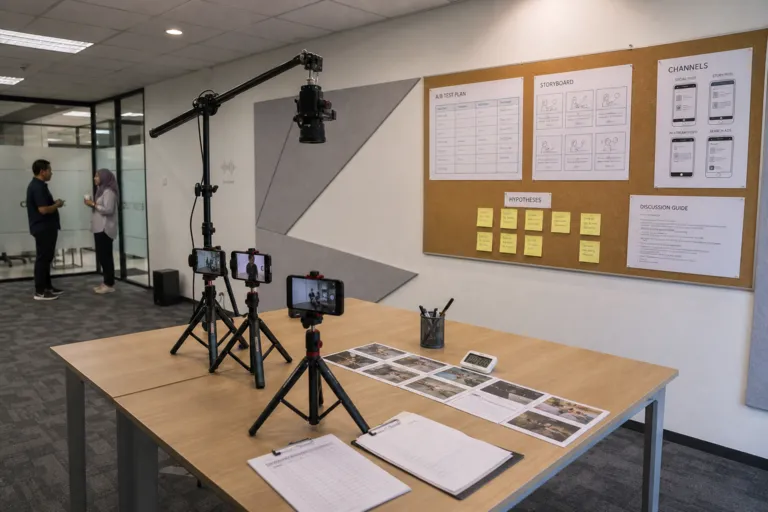
A dependable workflow combines research-style testing with in-market experiments. Survey-based ad copy testing can evaluate strengths and weaknesses before, during, or after launch, assessing metrics such as ad appeal, believability, originality, clarity of messaging, and relevance (Quantilope). You can run concept testing surveys where respondents rate different versions, then add open-ended questions to understand why they reacted a certain way. A/B testing adds direct comparison by showing two or more versions and asking for a preference, then analyzing results across segments like age or income level (Quantilope). To keep tests grounded, AskAttest recommends structured questions like how much people like or dislike taglines, how relevant they feel for the category, and how likely someone would be to find out more after reading a line.
Measurement is where many programs either become credible or collapse. Ad copy testing methodology connects closely with Click-Through Rate (CTR), Conversion Rate, and Campaign Conversion Rate, and A/B testing analysis provides the statistical framework for valid comparisons (Count.co). Count.co also warns about misaligned success metrics: “winning” copy can be a vanity-metric winner that fails to improve campaign conversion rates. Treat testing like controlled experimentation, running variations simultaneously so differences are attributable to the copy rather than timing. To support statistical rigor, calculate required sample size upfront based on baseline conversion rate and desired effect size (Count.co). Formalizing cadence helps too: ActiveMarketing advises specifying sample size requirements and success benchmarks in advance to maintain consistency and statistical confidence.
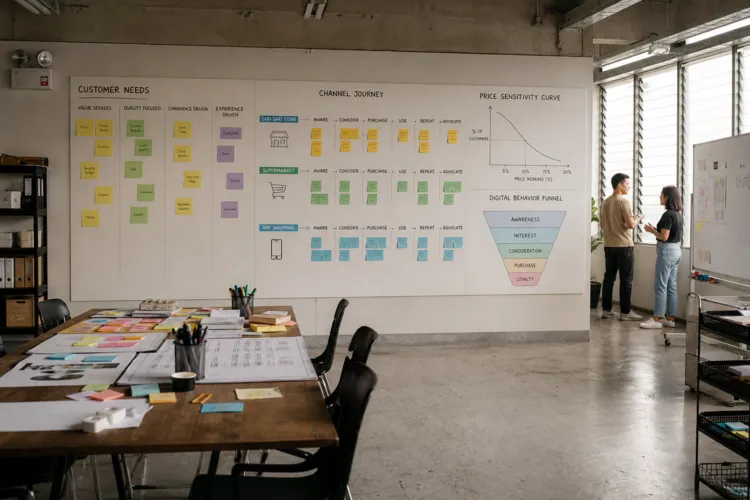
Finally, Malaysian teams need a system that connects copy results to the whole journey. A 360 marketing approach connects data points across the customer journey, enabling accurate attribution and ROI analysis, and helping leaders see which channels and creative variations are driving results (OpenMinds Resources). This matters as creative production scales: nearly 90% of advertisers in Malaysia now use generative AI in their creative workflow (OpenMinds Resources). If you use AI-generated variants, ActiveMarketing recommends rigorous safeguards, including automated fact-checking systems to validate statistics, claims, and product information against approved sources. With that foundation, ad testing Malaysia programs become repeatable: test, learn, refine, and roll out only what improves downstream business impact.
What is copy testing in advertising?
Which metrics should I track when testing ad copy?
How can surveys improve ad copy before launch?
How do I approach ad testing in Malaysia without relying on global benchmarks?
How common is generative AI in Malaysia’s creative workflow?