Benchmarking service quality starts with seeing the experience as customers live it. Mystery shopping does this by sending trained evaluators—often called secret shoppers—into real situations to interact with staff, ask questions, make purchases, and observe details that standard surveys and internal audits can miss. The goal is not guesswork. It is evidence: what happened, where it happened, and which behaviors supported or weakened the brand experience. For mystery shopping in the Philippines, that evidence can be especially useful when operations span different cities, formats, and service styles, and leadership needs a consistent way to compare performance across locations.
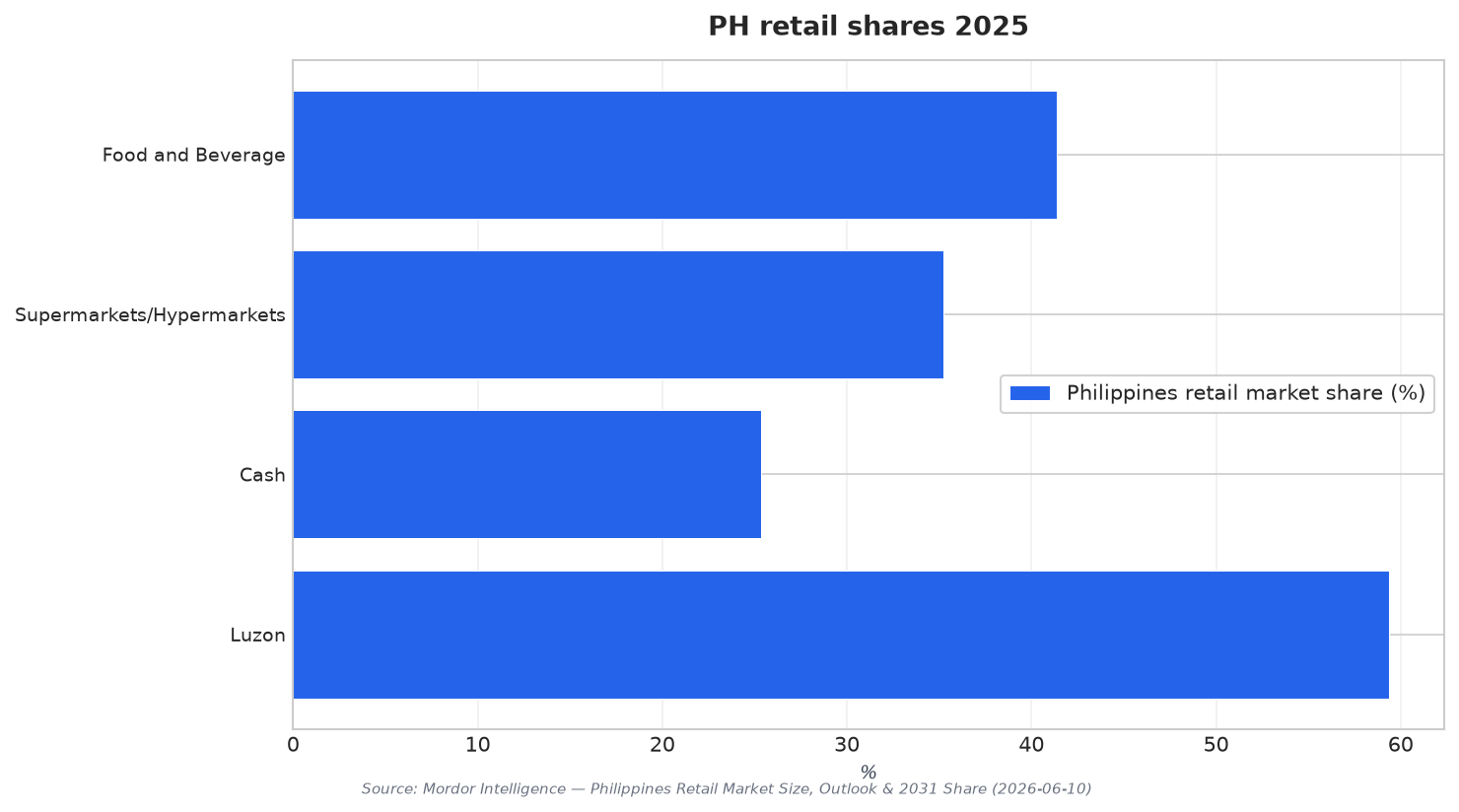
The need to benchmark retail execution is amplified by the scale and momentum of the local market. The Philippines retail market is expected to grow from USD 41.26 billion in 2025 to USD 44.51 billion in 2026, and it is forecast to reach USD 64.99 billion by 2031 at a 7.86% CAGR over 2026–2031. Within that market, Food and Beverage led with 41.38% share in 2025, while Supermarkets/Hypermarkets held 35.24% share. Luzon accounted for 59.39% of retail share in 2025, and Mindanao is projected to record a 7.84% CAGR through 2031. These shifts make standardized, location-by-location comparisons more valuable when teams want consistent service while expanding.
What a Benchmark-Ready Mystery Shopping Program Measures
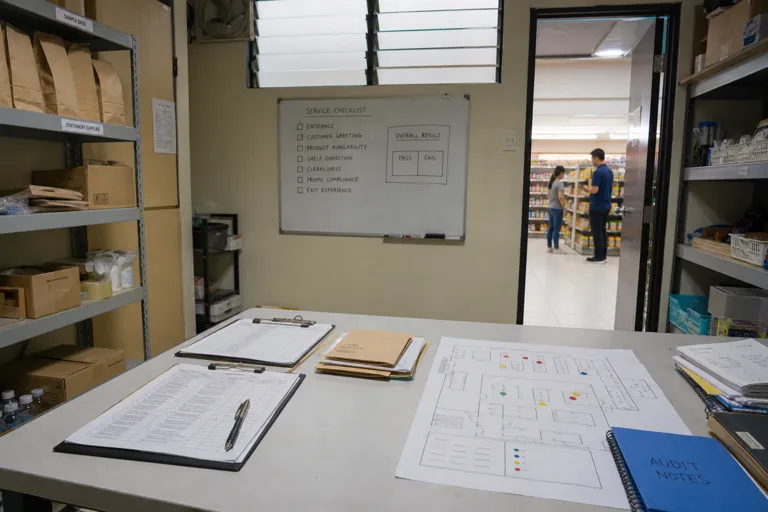
A benchmark-ready program starts with scenarios built around the customer journey and the standards you want repeated. Providers design shopper scenarios to evaluate service quality, staff behavior, compliance, product availability, and the overall customer journey, producing location-level evidence that can be used in improvement programs. A typical approach recruits evaluators who match the customer profile, briefs them on objectives, and sends them to test in-person locations, websites and apps, or phone support via call centers. After the visit, the evaluator completes a detailed evaluation form based on criteria developed with the business, creating comparable results across branches rather than isolated anecdotes.
For benchmarking to stick, reporting must include both the “what” and the “why.” Mystery shopping can blend structured KPI scoring with qualitative narratives so leaders can see patterns and also understand the context behind failures and wins. Programs are often flexible: typical timelines range from 1–8 weeks depending on scope, which lets teams run quick pulse checks or deeper, multi-site rounds. Some firms also support global rollouts; one provider cites successful programs across 60+ countries with a single point of contact, which matters when a Philippine operation needs to align standards with regional or global brand expectations.
It also helps to understand how the wider industry is evolving so you can choose methods that age well. One global forecast describes the mystery shopping services market scaling from USD 2,217.62 million in 2024 to USD 3,237.20 million by 2032, while another industry report projects a market reaching $3.8 billion by 2031 and cites a 7.2% CAGR from 2023 to 2031. In terms of regional context, Asia Pacific is expected to register the fastest CAGR, supported by rising awareness of customer service quality, urbanization, and retail and hospitality expansion in China, India, and Southeast Asia. For teams operating in the Philippines, that backdrop reinforces why consistent benchmarking—paired with clear actions—can become a durable advantage.
How does mystery shopping help benchmark service quality in the Philippines?
What does a mystery shopper typically evaluate?
How long do mystery shopping programs usually take?
What retail figures make benchmarking more important locally?