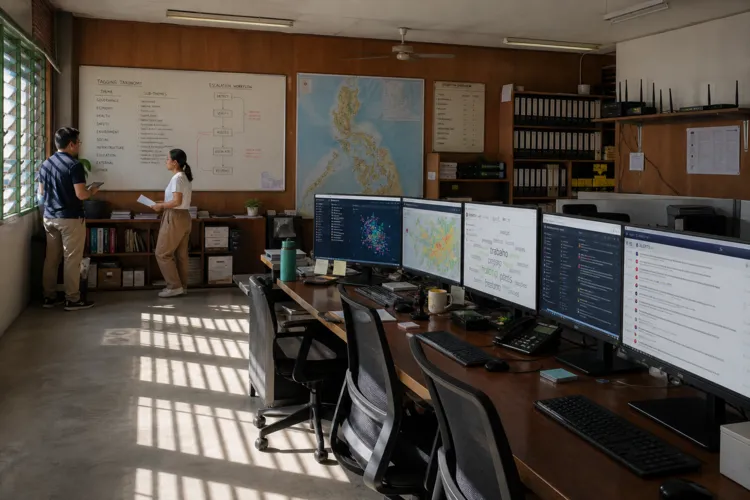
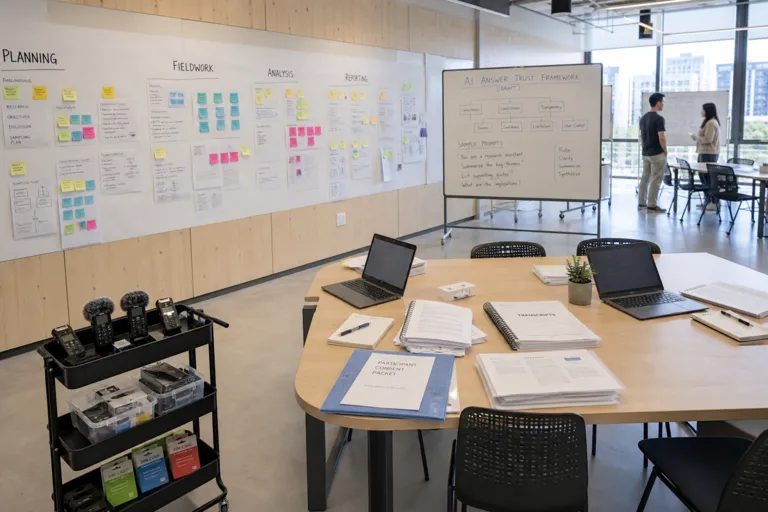
Generative AI is changing what market research work looks like, not just how fast it gets done. Several industry sources describe a shift from AI handling basic tasks such as data cleaning and text analysis into broader workflows such as survey design, qualitative coding, report writing, and real-time insight generation. In 2026, the classic stages still exist—collect, analyze, report—but generative AI is now present across the full workflow, from planning a study to producing a client-ready deck. The practical impact is a reallocation of effort: less time on mechanical steps like transcript cleanup, first-pass coding, and slide formatting, and more time on higher-value work like asking better questions, validating findings, and translating evidence into decisions.
For teams working on AI in market research in Singapore, the local business environment also points to broader organizational adoption. A MarketsandMarkets report values the Singapore generative AI market at USD 1,378.8 million in 2025 and projects it will reach USD 24,304 million by 2030, representing a 50.7% compound annual growth rate. The same report describes Singapore as a regional financial and technology epicenter, with adoption across sectors including banking, fintech, healthcare, and e-commerce, and highlights government initiatives such as AI Singapore and digital transformation programs as accelerators of investment in generative AI infrastructure and talent development. For insight teams, this matters because stakeholders become more ready to operationalize research outputs when adjacent functions are also implementing generative AI.
Where Generative AI Plugs Into the Workflow—and What Changes
Across the lifecycle, generative AI often starts at study design. It can draft discussion guides, suggest survey question wording, and propose follow-up probes aligned to an objective. Used well, it speeds planning; used carelessly, it can introduce subtle bias, such as leading language or missing alternatives. During data collection and fieldwork, transcription may be less of a bottleneck, but transcript usability still is, because teams still need speaker labeling, readable formatting, and searchable evidence to move from sessions to insights quickly. Sources also note that many projects now blend interview audio, focus group recordings, survey open-ends, and quantitative tracking, and that AI is used to keep these formats connected so teams can move from raw inputs to a single storyline.
Analysis and reporting are where generative AI can feel most like a new “analyst” on the team. One source describes today’s tools as synthesizing vast amounts of data into actionable insights, generating outputs such as summaries, mock customer quotes, and even synthetic datasets during inference. Another notes that end-to-end processes are becoming more common, where AI helps organize inputs, propose structure, draft themes, quantify patterns, and shape content into report-ready outputs. The workflow win is clear: it becomes easier to draft a coherent narrative from mixed data types. The risk is also clear: because output is easier to generate, it is easier to publish conclusions before they are properly checked against what people actually said and what the numbers show.
Generative AI is also transforming the context in which research is interpreted, because it is increasingly part of consumer discovery. One source argues that AI assistants like ChatGPT, Gemini, and Perplexity are becoming entry and exit points for gathering information, synthesizing direct answers from across the web instead of users scanning search results. That is why Answer Engine Optimization (AEO) and Generative Engine Optimization (GEO) are positioned as new concerns: AEO focuses on optimizing content so it becomes the answer in AI-generated responses, while GEO expands that to ensure a brand is accurately represented across generative AI systems. For insight teams, this adds a new question alongside “what do consumers think”: how AI interprets and represents the brand, and how that interpretation could shift narrative control over time.
How is generative AI changing day-to-day market research work in 2026?
What research stages can generative AI support most directly?
What is the Singapore outlook for generative AI investment that insight teams should be aware of?
How does AI-driven discovery affect brand and research priorities?
How can insight teams approach AI in market research in Singapore without losing rigor?