

Across Vietnam, more companies say they measure customer experience than ever. One Vietnam-focused report found that 74% of businesses reported measuring CX, yet most focused on “perceived” metrics such as CSAT or NPS rather than building end-to-end measurement across the customer journey. That gap matters because leaders in Vietnam’s service economy are being pushed to compete on experience, not just on features or price. As Filum.ai’s Founder & CEO Vien Tran put it, the critical issue is not how many CX initiatives exist, but whether companies can operate them consistently, measure them, and improve them as competition shifts strongly toward experience-led differentiation.
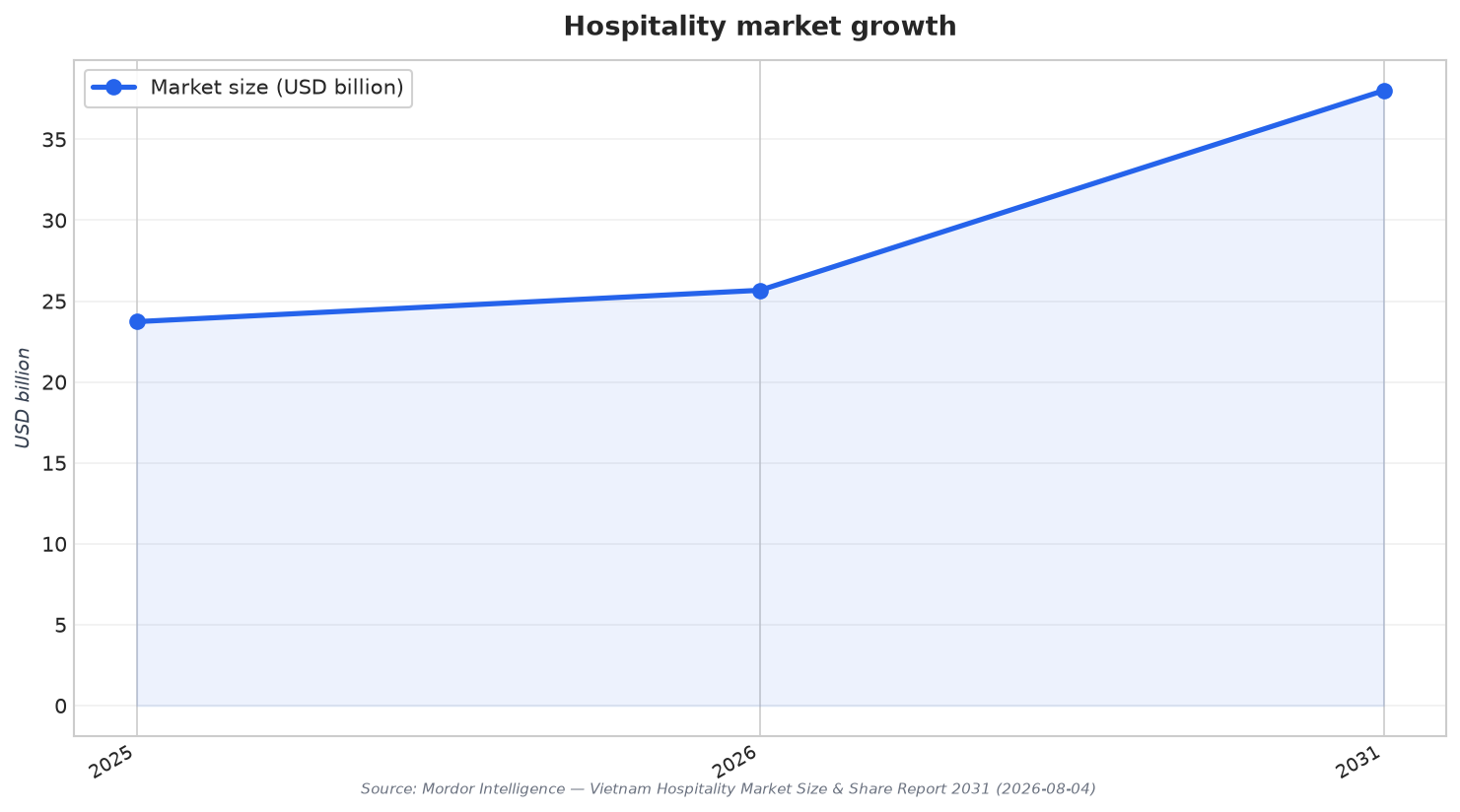
The pace of change is visible in service categories where digital and travel demand shape expectations. Mordor Intelligence valued the Vietnam hospitality market at USD 23.73 billion in 2025 and estimated growth from USD 25.67 billion in 2026 to USD 38.01 billion by 2031, at an 8.17% CAGR for 2026–2031. Within that market, independent hotels held 69.88% share in 2025, OTAs controlled 58.85% of booking-channel share, and southern Vietnam represented 51.47% of market share. These shifts expand the number of touchpoints that can create detractors or promoters, so measurement needs to be channel-aware and region-aware, not limited to a single “overall” score.
How to Make NPS Useful (Not Just Easy)
NPS is popular because it is simple and standardized. It asks customers how likely they are to recommend a company on a 0–10 scale, then calculates NPS as the percentage of promoters (9–10) minus the percentage of detractors (0–6), producing a score from -100 to +100. An example provided by Armatis shows that if 45% are promoters and 15% are detractors, the NPS is +30. However, sector context matters: Armatis notes that an NPS of +20 can be very satisfactory in telecommunications and disappointing in luxury. Retently’s 2025 NPS Benchmark Report cited by Armatis also puts the global average NPS across sectors at 32, with B2C averaging 49 versus 38 for B2B.
To turn NPS into a steering tool in Vietnam, combine it with diagnostic metrics and ownership. Armatis notes that 49% of NPS users also measure an additional metric, most commonly CSAT, because one number rarely tells you where friction lives. The Vietnam report led by SYCA’s Thuong Le argues for directly comparing consumer expectations with business implementation capability, then assigning the right people to own the customer journey and improve based on data. Its “Pragmatic CX” approach emphasizes filling “fast, accurate, and sufficient” gaps, prioritizing bottlenecks that hit user experience and operational efficiency, and linking CX to measurable business indicators while deploying technology with a human-in-the-loop model.
Finally, measurement maturity must match the speed of Vietnam’s broader services expansion. IMARC projects the Vietnam IT services market to grow at a 10.07% CAGR during 2026–2034, while Mordor Intelligence notes chain hotels are forecast to expand at an 11.65% CAGR to 2031 and direct digital bookings are projected to grow at a 14.36% CAGR. These growth curves increase the stakes for consistent measurement across digital support, booking, and service recovery. In customer experience research Vietnam teams, the most practical next step is to segment results by channel and customer type, track NPS alongside CSAT, and connect both to operational indicators so improvements are measurable, repeatable, and owned.
How is NPS calculated, and what range can it take?
What does Vietnam-focused research say about how companies measure CX today?
What is the global average NPS, and how do B2C and B2B compare?
Why is sector comparison important when interpreting NPS?
How should customer experience research in Vietnam make NPS more actionable?