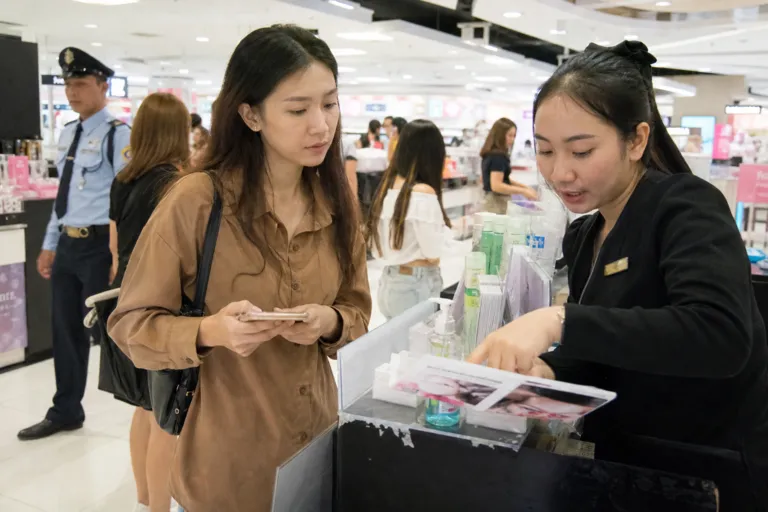
For Thai retail and service brands, performance is not only what managers plan, train, or report. It is what happens at the counter, on the shop floor, and in every real customer interaction. Mystery shopping is designed to capture that reality. It deploys trained, anonymous evaluators who act like ordinary customers and then record what they experience, including service quality, compliance with standards, and the full customer journey. As MindMarket explains, it reveals what truly happens when customers interact with your brand, not what you think happens. That makes it a practical tool for brands in Thailand that want evidence of execution, not assumptions.
At its core, mystery shopping is a form of primary market research. Management Study Guide describes it as using quantitative techniques because the shopper usually fills out a form rating the experience. Shelvz frames it as a way of being in the customer’s shoes to see what they go through before making a buying decision. In an omni-channel world, Shelvz also notes that mystery shopping has evolved with tools like mobile apps, GPS tracking, and real-time reporting, which can improve efficiency and accuracy. For Thai brands, these mechanics matter because they create comparable, repeatable observations across outlets and teams.
What Mystery Shopping Measures in Retail and Service Settings
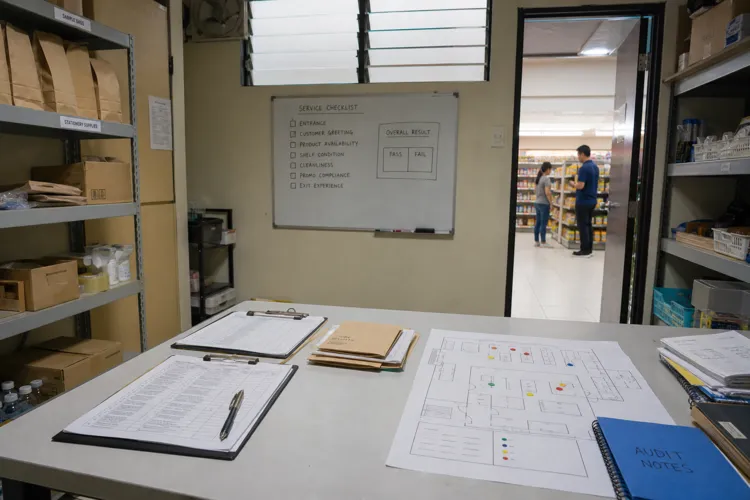
A strong program focuses on behaviors that influence customer trust and outcomes. SafetyCulture defines retail mystery shopping as hiring undercover evaluators to assess customer service, product quality, and overall experience, including visits that involve purchases, questions, and observation of employee behavior. It also emphasizes compliance with brand standards by checking whether employees follow policies and procedures. A separate global market analysis summary on GII Research adds common evaluation areas used by companies in retail, hospitality, and automotive: service quality, store appearance, promotional effectiveness, and sales interactions. Together, these targets show how Thai brands can audit execution in ways that align with daily operations.
Beyond the checklist, the goal is decision-ready insight. Shelvz highlights real-world feedback, unbiased evaluation because staff do not know the evaluator, and clearer identification of training needs. SafetyCulture links these findings to better training and improved customer interactions, while also describing mystery shopping as data-driven feedback on store ambiance and checkout experiences. SafetyCulture also cites a behavioral outcome: positive experiences can enhance buying behavior, making 67% of the customers repeat business and refer the services to other people. Brands in Thailand can use these outputs to prioritize which service moments need coaching, reinforcement, or process redesign.
Market signals also suggest why retail and services keep investing in this method. Fortune Business Insights reports that, globally, the retail segment held a major mystery shopping service market share of 30% in 2024. The same source states that the in-person mystery shopping segment is expected to dominate the market share in 2026 by 33.47%, describing in-person visits as evaluations of consumer service and experience across industries that include retail, restaurant, banking, and hotel. For a Thailand-focused program, these global figures provide context on where the industry is concentrating effort, while local teams can tailor scenarios to Thai customer expectations, brand rules, and service scripts.
What is mystery shopping, and why do Thai brands use it?
How can mystery shopping in Thailand improve retail execution?
What do mystery shoppers typically evaluate in retail and service locations?
What do global market sources say about retail and in-person mystery shopping?