
For teams doing qualitative research AI analysis in Malaysia, the appeal is simple: faster turnaround without losing the “why” inside interview transcripts. Multiple sources describe big speed gains when AI handles structured work such as transcription, tagging, clustering, and theme extraction. One guide notes that tasks that used to take several hours can be done in several minutes when AI supports transcription and notes. Another describes how work that once took weeks—hand-coding, grouping themes, and scoring sentiment—can drop to hours with AI assistance. This shift helps researchers move from raw data to decisions faster, especially when interview volume grows.
Speed is also about scale. AI-assisted workflows make it more practical to run and analyse larger programs, rather than being trapped by small samples and long timelines. One example cited is Anthropic completing 81,000 interviews across 159 countries in a single week, showing what is possible when automation is applied at scale (global context, not Malaysia-specific). In more typical organizational use, AI is framed as ideal when you have dozens of interviews and tight timelines, with one source calling out “30+ interviews” as a point where the benefits become clearer. AI can also keep a consistent first-pass coding logic across responses, which can reduce inconsistency compared with fully manual approaches.
Where AI Helps Most—and Where It Still Falls Short
Across the sources, AI is strongest at repeatable, structured tasks: sentiment scoring, initial theme extraction, clustering similar responses, and proposing candidate codes. Tools and platforms vary, but the core promise is the same: code and theme open-ended text in minutes and make results easier to quantify and compare across segments. At the same time, the limitations are consistent. AI can struggle with nuance, context, and risk-sensitive interpretation. Guidance is explicit that you should not ship AI-coded findings without human review, and that sensitive topics (such as healthcare decisions, family planning, and mental health) warrant careful human validation for ethical and accuracy reasons.
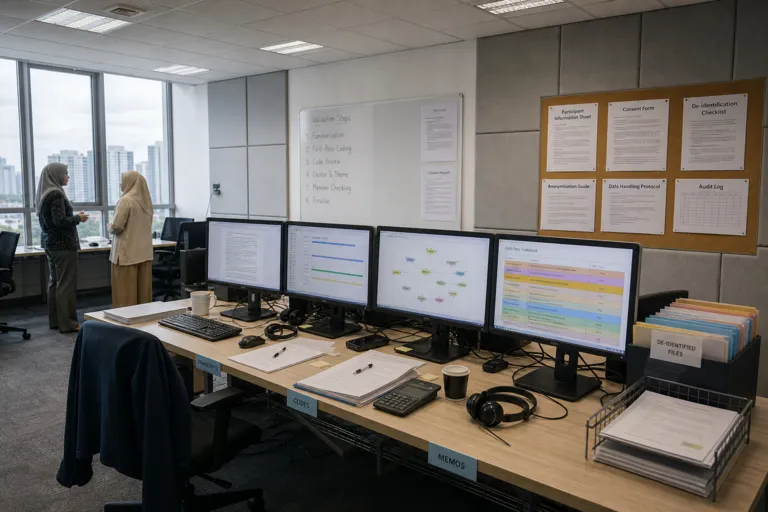
A practical way to keep speed without sacrificing trust is a staged, hybrid workflow. One recommended structure breaks AI-assisted qualitative work into transcription, translation, tagging or coding, clustering, validation, and synthesis, with a dedicated prompt and human review at each stage. This avoids the common mistake of using a single “all-in-one” prompt to analyse an entire dataset and generate final insights. Another approach advises a first human read-through of transcripts before coding, to understand the landscape and avoid over-labeling early interviews. Then let AI suggest codes and themes, followed by human refinement, checks for missed meaning, and clear reporting.
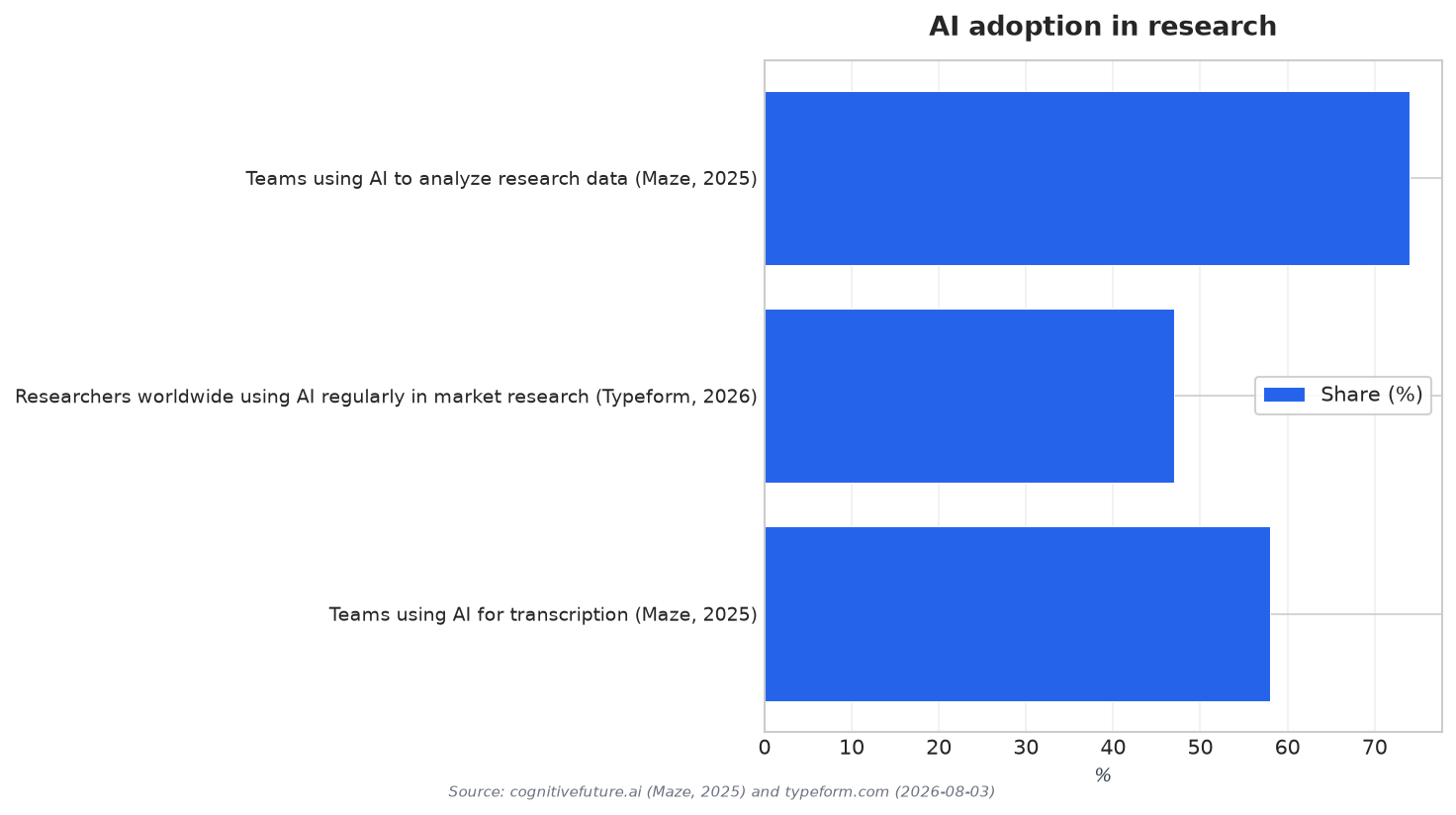
Adoption signals why this matters now, even for teams that want to move cautiously. One source reports that around 47% of researchers worldwide use AI regularly in market research activities. Another states that 74% of research teams use AI to analyse their research data and 58% use it for transcription (Maze, 2025). These are global indicators, not Malaysia-only measures, but they show that AI-assisted qualitative analysis is becoming normal practice. For Malaysian interview studies, the most defensible path is not choosing AI or humans. It is using AI for the heavy lifting, then reserving human judgment for nuance, context checks, and decisions that must stand up to scrutiny.
How can AI speed up qualitative interview analysis for teams in Malaysia?
What scale of qualitative research becomes more feasible with AI?
Where does human review still matter in AI-assisted qualitative analysis?
What workflow reduces the risk of relying too much on AI?
How common is AI use in qualitative research today?