

Southeast Asia consumer behavior varies across generations, income levels, and local markets. Gen Z shoppers prioritise digital convenience, aspirers seek quality and status, middle-class households balance value with lifestyle upgrades, and older consumers often favour familiarity and service. Understanding these differences is essential for effective consumer segmentation.
According to The New ASEAN Consumer, Eurogroup Consulting's 2023 study produced for the French Foreign Trade Advisors (CCE) APAC Forum, brands cannot approach Southeast Asia as one homogeneous market.
Drawing on regional research and interviews with business leaders, the whitepaper identifies seven consumer profiles that help explain how purchasing priorities differ across ASEAN.
Why Does Southeast Asia Consumer Behavior Vary So Widely?
Southeast Asia brings together markets with different demographic profiles, purchasing power, cultures, and retail environments.
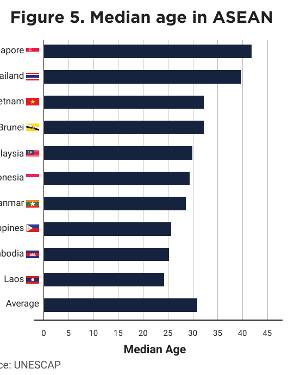
Age is one important distinction. The region's median age was approximately 31, according to United Nations Economic and Social Commission for Asia and the Pacific (UNESCAP) data cited in the 2023 whitepaper. However, countries such as Thailand and Singapore have older population structures than Cambodia and the Philippines.
Income also influences purchasing decisions. Consumers may seek affordable essentials while spending more on products associated with quality, convenience, or status.
These differences extend beyond national borders. Urban professionals, rural households, and residents of secondary cities may respond differently to the same product.
The New ASEAN Consumer whitepaper examines these consumer segments and how brands can adapt their strategies.
What Do Gen Z and Millennials Expect From Brands?
Younger consumers are important drivers of digital adoption, but convenience and personalisation are not their only priorities.
A World Economic Forum (WEF) survey conducted in 2020 found that 58% of ASEAN youth consumers said pandemic lockdowns encouraged them to reconsider their budgeting habits. Another 87% reported increasing their use of digital tools during the pandemic.
These findings describe consumer responses during that period rather than current 2026 survey results.
For brands, several behaviours are worth examining:
- Mobile convenience: Digital discovery, payments, and purchasing journeys should be straightforward.
- Personal relevance: Content and product recommendations should reflect consumer interests and local preferences.
- Value consciousness: Younger consumers may balance discretionary purchases with careful everyday spending.
- Brand credibility: Authenticity, product quality, and relevant social or environmental commitments can influence consideration.
Gen Z and millennials are not interchangeable segments. Their purchasing power, life stages, and product needs can differ substantially.
A successful digital strategy should therefore begin with research into specific audiences rather than broad generational assumptions.
The New Middle Class Is Changing What Value Means
Rising income levels are expanding the range of products and services accessible to Southeast Asian households.
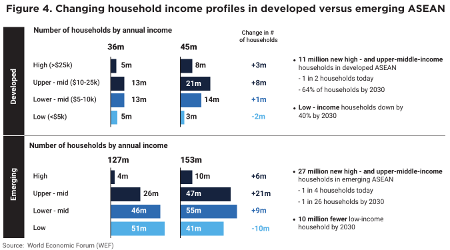
The World Economic Forum projected that ASEAN's high- and upper-middle-income households would increase from 30 million in 2019 to 57 million by 2030, as cited in the 2023 whitepaper.
This creates opportunities for brands offering products that combine quality, convenience, and perceived status.
However, greater affluence does not eliminate price sensitivity.
Fabian Teja Boegershausen, Category Director – General Merchandise at Lazada, explains in the whitepaper:
"In terms of consumption trends, people in the region tend to look for deals and prioritise spending on items they hold in high regard, like branded electronics or cars, while spending as little as possible on everyday items."
This distinction matters for pricing and product positioning.
Consumers may remain highly price-conscious when purchasing groceries and household essentials but place greater emphasis on durability, design, and brand reputation when choosing electronics, skincare, or clothing.
Brands should consider how purchasing priorities change as households move into higher income groups.
Why Are Older ASEAN Consumers an Overlooked Opportunity?
While younger shoppers attract considerable attention, ASEAN's older population also represents an important consumer segment.
The whitepaper identifies growing demand for healthcare, wellness, accessible housing, and convenient retail services among older consumers.
It also notes that some older shoppers prefer familiar brands, simple purchasing experiences, and personalised customer support.
Relevant opportunities include:
- Healthcare and wellness: Accessible services, preventive care, and products supporting independent living.
- Retail convenience: Clear product information, straightforward digital interfaces, and responsive customer service.
- Communication channels: A balanced approach combining traditional media, relevant social platforms, and word of mouth.
- Trust and loyalty: Reliable quality, practical value, and consistent after-sales assistance.
These preferences are broad research observations, not rules for every older consumer.
Brands should test actual needs, purchasing power, and channel preferences within their target market.
Seven Consumer Profiles Brands Should Understand
Eurogroup Consulting's research identifies seven broad consumer groups, each with different purchasing motivations.
- Gen Z: Digital convenience, personalisation, authenticity. Brand approach: mobile-first engagement.
- Millennials: Experiences, convenience, quality. Brand approach: relevant lifestyle positioning.
- Aspirers: Upward mobility, prestige, durability. Brand approach: accessible aspirational products.
- Middle class: Value, wellness, convenience. Brand approach: clear quality-to-price proposition.
- Affluent: Premium quality, exclusive experiences. Brand approach: differentiated premium offerings.
- Rural traditionalists: Affordability, reliability, familiarity. Brand approach: local distribution and practical value.
- Older consumers: Trust, simplicity, service. Brand approach: accessible experiences and customer support.
These profiles are useful starting points, but they should not replace country-specific segmentation.
Decathlon provides a practical example. As described in the whitepaper, the sporting-goods retailer adapts its ASEAN customer segmentation to differences in age distribution between markets such as Thailand and Cambodia.
Rather than relying on one regional customer profile, Decathlon adjusts its positioning to local demographic conditions.
For brands, the practical implication is to combine demographic information with attitudes, purchasing behaviour, and customer needs.
Consumer research consulting in Southeast Asia can support this process through segmentation, customer research, and market-specific insights.
Businesses planning market entry or product expansion can also contact the Southeast Asia market research team to discuss their research requirements.
Frequently Asked Questions
What are the main consumer segments in Southeast Asia?
Eurogroup Consulting's The New ASEAN Consumer identifies Gen Z, millennials, aspirers, the middle class, affluent consumers, rural traditionalists, and older shoppers. Each segment has different purchasing motivations, financial circumstances, and preferred channels. These categories are useful for initial planning but should be refined using country-specific consumer research.
What does Gen Z in Southeast Asia value?
Gen Z consumers are often associated with digital convenience, personalisation, authenticity, and relevant brand values. However, their purchasing decisions also depend on price, product quality, and available income. Brands should research specific customer groups rather than assuming that younger consumers across ASEAN have identical preferences.
Who are ASEAN's aspirational consumers?
Aspirers are consumers moving toward greater financial security and purchasing power. They may seek products that represent progress, convenience, quality, and social mobility. Effective positioning often combines an attainable price with visible product benefits, reliability, and a sense of personal advancement.
Is Southeast Asia's middle class growing?
The 2023 Eurogroup Consulting whitepaper cites World Economic Forum projections showing significant growth in ASEAN's higher-income household segments through 2030. These are long-term projections rather than confirmed current figures. For businesses, the important consideration is how rising purchasing power changes demand across product categories and markets.
How can brands segment Southeast Asian consumers effectively?
Brands can start with broad profiles such as those in The New ASEAN Consumer, then refine them with country-specific research on age, income, location, shopping channels, and purchasing motivations. Decathlon's approach of adapting segmentation to each market's demographics shows why local data should guide product, pricing, and communication decisions.
Understand the Consumers Behind Southeast Asia's Growth
For brand managers, marketers, and business leaders, The New ASEAN Consumer provides deeper analysis of consumer profiles, regional trends, expert interviews, business cases, and practical recommendations for growth across Southeast Asia.