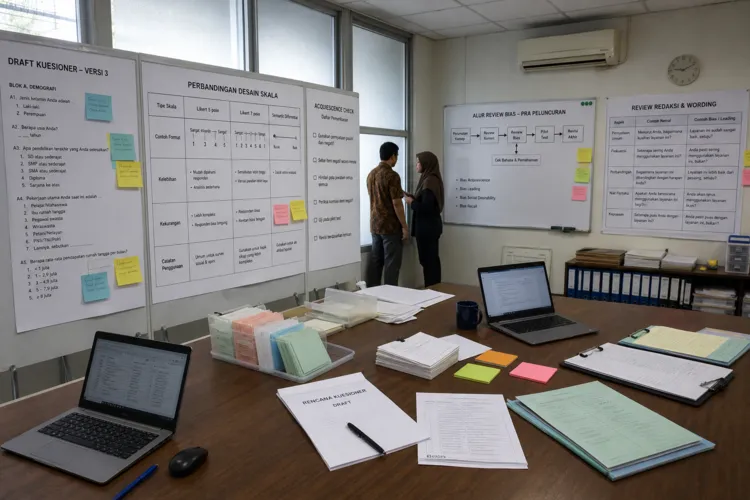
In multilingual studies, translation is not just a linguistic task. It is tightly linked to research design, because wording, tone, and structure influence how participants interpret what they are being asked. Language Insight notes that once meaning starts to shift across languages, comparability across markets becomes weaker. That problem is not limited to international comparisons. It can also appear when you adapt a survey for Vietnamese respondents across different dialects, education levels, or local ways of expressing concepts. The practical goal is equivalence. Respondents should understand and answer the same construct in the same way, so the insight remains comparable and decisions remain defensible.
Good survey translation aims to preserve meaning, tone, difficulty level, and measurement properties. Quali-Fi emphasizes that effective translation goes beyond word-for-word swapping and should account for cultural context, idiomatic expression, reading level, and differences in how concepts are understood across populations. Language Insight gives examples of common research concepts that can shift in meaning, including “value for money,” as well as terms like “satisfied,” “likely,” and “trust.” If a translated question changes meaning, even subtly, you may no longer be measuring the same thing across groups. Linkinfotech also warns that even small translation errors can quietly corrupt an entire dataset before analysis begins, even if the text is grammatically correct.
How Back-Translation Protects Survey Meaning
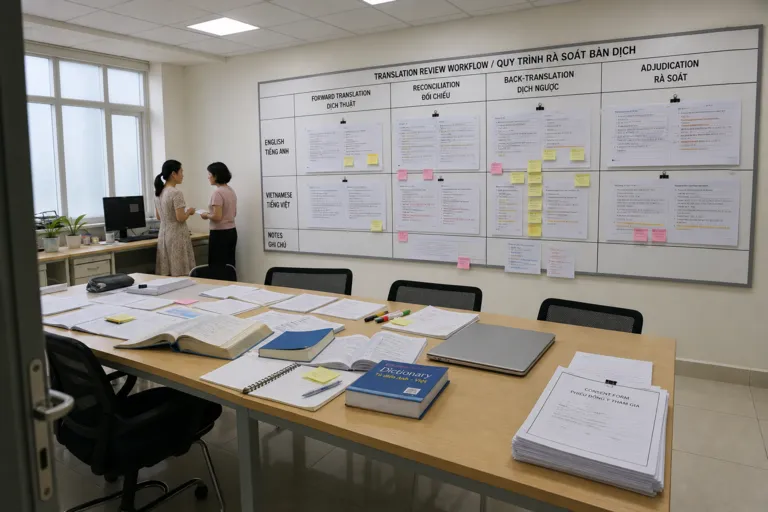
Back-translation is a quality assurance method for multilingual surveys. Quali-Fi defines it as an independent translation of the translated instrument back into the source language by a different translator who has not seen the original. The back-translated version is compared side-by-side with the original to identify meaning shifts, omissions, additions, or ambiguities introduced during the initial translation. If the back-translation closely matches the source, the forward translation likely preserved the intended meaning. If it does not, specific questions need revision. Quali-Fi also describes a structured sequence: complete the forward translation (ideally using two independent translators and reconciliation), select a back-translator who has not seen the source, translate back as literally as possible, compare versions question by question, and resolve discrepancies.
Multiple sources frame back-translation as a key control for market research quality. Quali-Fi calls back-translation the “gold standard” for quality assurance in survey translation and says it is the most widely recommended quality control step in international survey research, adding that it is required by many regulatory bodies for clinical trial questionnaires. Responsly advises that for market research surveys, accuracy and equivalence are critical for comparable cross-market data, and it recommends back translation and pre-testing. Data Investigator similarly describes back translation as one of the most effective methods to ensure translation accuracy and to help verify that a translated survey retains the original meaning. Together, these points support a rigorous workflow when the stakes are high and the data must remain comparable.
For teams planning market research questionnaire translation in Vietnam, the operational takeaway is to start with the study, not the language. Language Insight recommends clarifying objectives, respondent profiles, the research mode, the tone expected, terminology that must stay consistent, where local adaptation is acceptable, and how outputs will be analyzed or compared. That briefing context helps translators and reviewers make informed choices when wording does not translate directly. From there, apply a structured method such as forward translation with reconciliation, then back-translation, followed by discrepancy resolution and pre-testing. Linkinfotech underlines why: getting translation right the first time is almost always cheaper than trying to fix flawed data after collection.
Why can literal translation weaken survey comparability across languages?
What is back-translation in multilingual survey research?
What workflow steps does Quali-Fi describe for back-translation?
When should a team use back-translation and pre-testing?
How should teams approach market research questionnaire translation in Vietnam to protect meaning?