ASEAN urbanization is reshaping Southeast Asia's economic geography, creating new opportunities beyond established metropolitan centers. As urban populations expand, secondary cities are becoming increasingly important destinations for infrastructure investment, industrial development, and modern services. Their ability to accommodate growth sustainably will influence the region's economic competitiveness and long-term development.
According to the Future ASEAN Sustainable Cities whitepaper by Eurogroup Consulting, developed in cooperation with the French Foreign Trade Advisors (CCE), Southeast Asia's urban population is projected to increase from 334 million in 2020 to 527 million by 2050.
The report highlights an important shift: future urban growth will not be concentrated exclusively in megacities. Smaller and emerging urban centers are expected to play a much larger role in shaping Southeast Asia's economic landscape.
ASEAN Urbanization: A Region Growing Beyond Its Megacities
Data from the United Nations Department of Economic and Social Affairs (UN DESA), cited in the Eurogroup Consulting whitepaper, illustrates the scale of this transition. In 1970, only 21% of Southeast Asia's population lived in urban areas. By 2020, that share had reached 50%, representing approximately 334 million people. UN DESA projections included in the report indicate that urban residents could account for 66% of the population by 2050, equivalent to 527 million people.
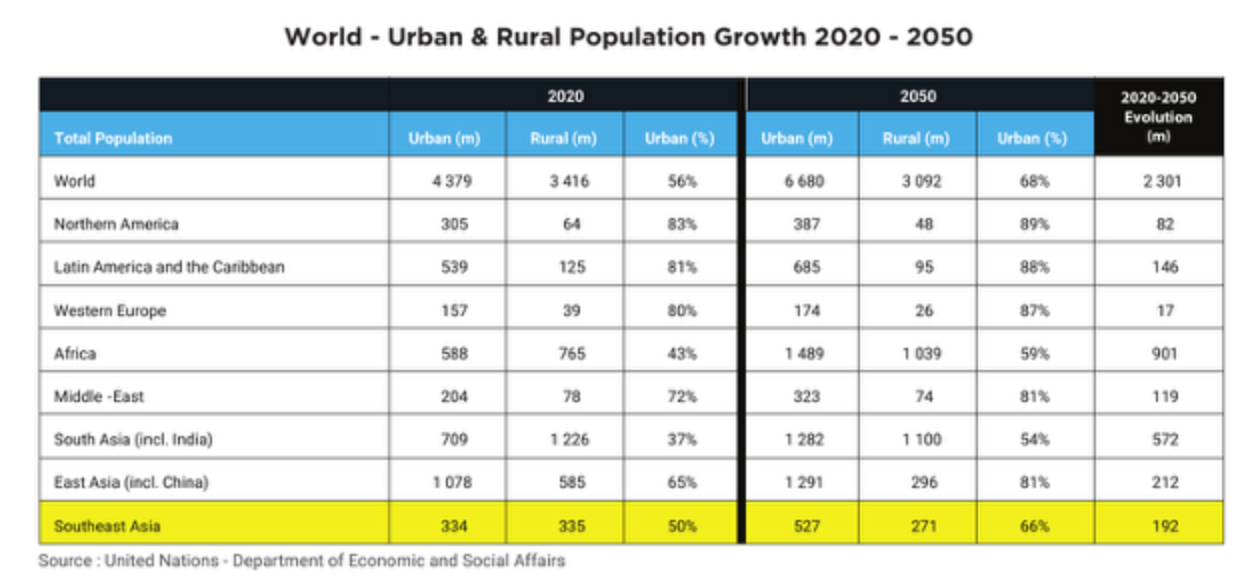
Figure 1: World Urban & Rural Population Growth, 2020–2050. Source: Future ASEAN Sustainable Cities, Eurogroup Consulting (p. 13), based on UN DESA.
These projections suggest a substantial expansion in demand for housing, transport networks, electricity, water infrastructure, healthcare, and commercial facilities. However, rapid expansion can place significant pressure on public services, particularly where population growth outpaces infrastructure development.
The central question for ASEAN governments and investors is therefore not simply how quickly cities will grow, but whether urban development can support productivity, resilience, and long-term quality of life.
Why Secondary Cities Are Emerging as ASEAN's Growth Engines
Major metropolitan areas such as Jakarta, Bangkok, Manila, and Ho Chi Minh City remain essential economic centers. Nevertheless, ASEAN's next stage of urban development is expected to extend further beyond these established hubs.
The Future ASEAN Sustainable Cities whitepaper identifies secondary cities, generally defined as urban areas with populations between 200,000 and 2 million, as increasingly important contributors to regional economic expansion. By 2030, these cities are projected to account for more than 40% of ASEAN GDP, with many recording projected annual economic growth rates of 5–8%, according to the report's analysis.
Several structural developments are supporting this shift. First, industrial diversification and new economic zones are creating employment and investment opportunities outside traditional capitals. Second, infrastructure expansion is improving the connections between smaller cities, production centers, and larger markets. Third, population growth is creating demand for commercial services and modern urban facilities.
Cities such as Cebu in the Philippines and Can Tho in Vietnam illustrate the broader geographic distribution of ASEAN's urban development. Both are identified among the region's Tier 1 and Tier 2 urban centers in the whitepaper, demonstrating the significance of economic activity beyond national capitals.
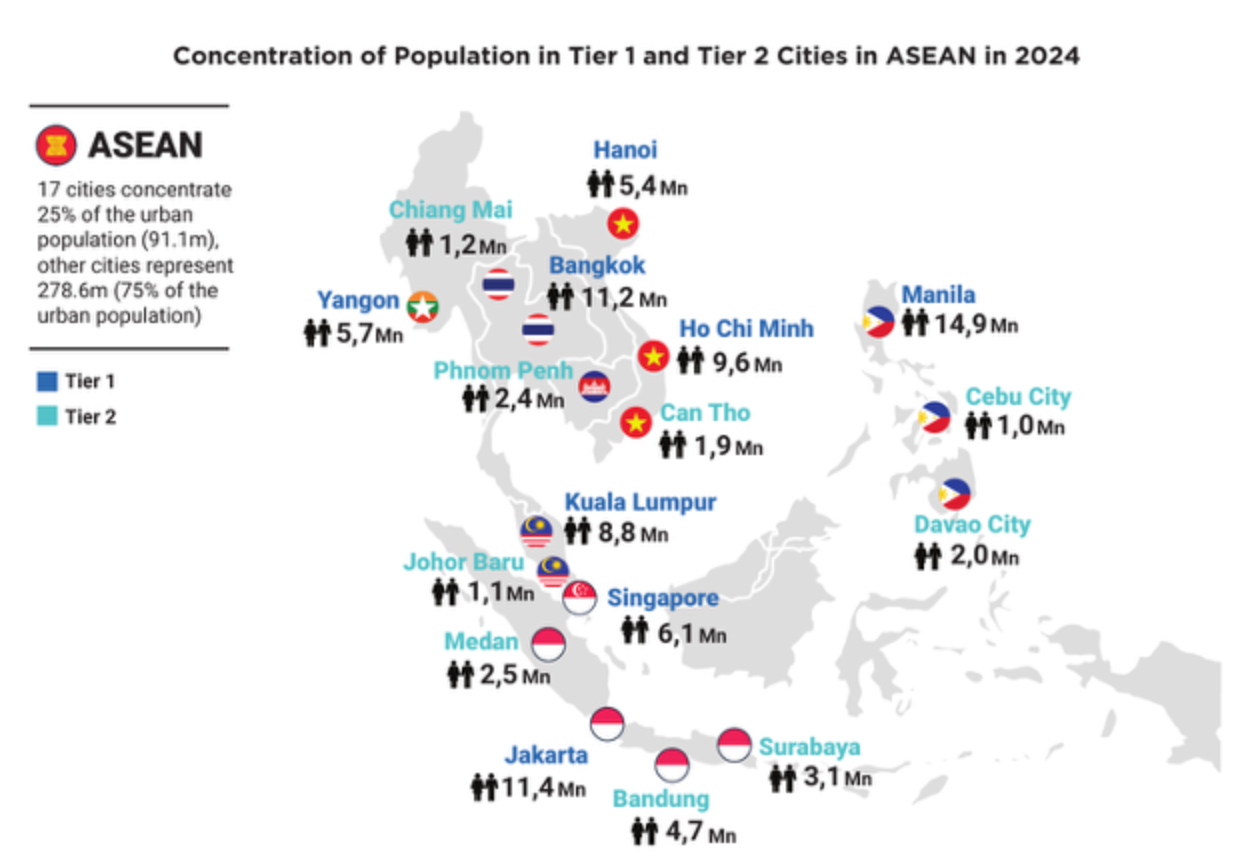
Figure 2: Concentration of Population in Tier 1 and Tier 2 Cities in ASEAN, 2024. Source: Future ASEAN Sustainable Cities, Eurogroup Consulting (p. 14).
However, secondary cities should not be treated as a single market category. Their industrial structures, infrastructure maturity, consumer demand, and institutional capabilities differ considerably, so companies must evaluate individual urban markets rather than relying exclusively on national economic indicators.
Rising Incomes, Expanding Cities: The Next Wave of Urban Demand
Population growth is only one factor influencing Southeast Asia's urban transformation. Changes in household income and purchasing power are also reshaping the products and services that cities need.
The Eurogroup Consulting whitepaper, drawing on regional household income analysis, projects that ASEAN's middle class will expand from 29% of the population in 2010 to approximately 65% by 2030, equivalent to 472 million people.
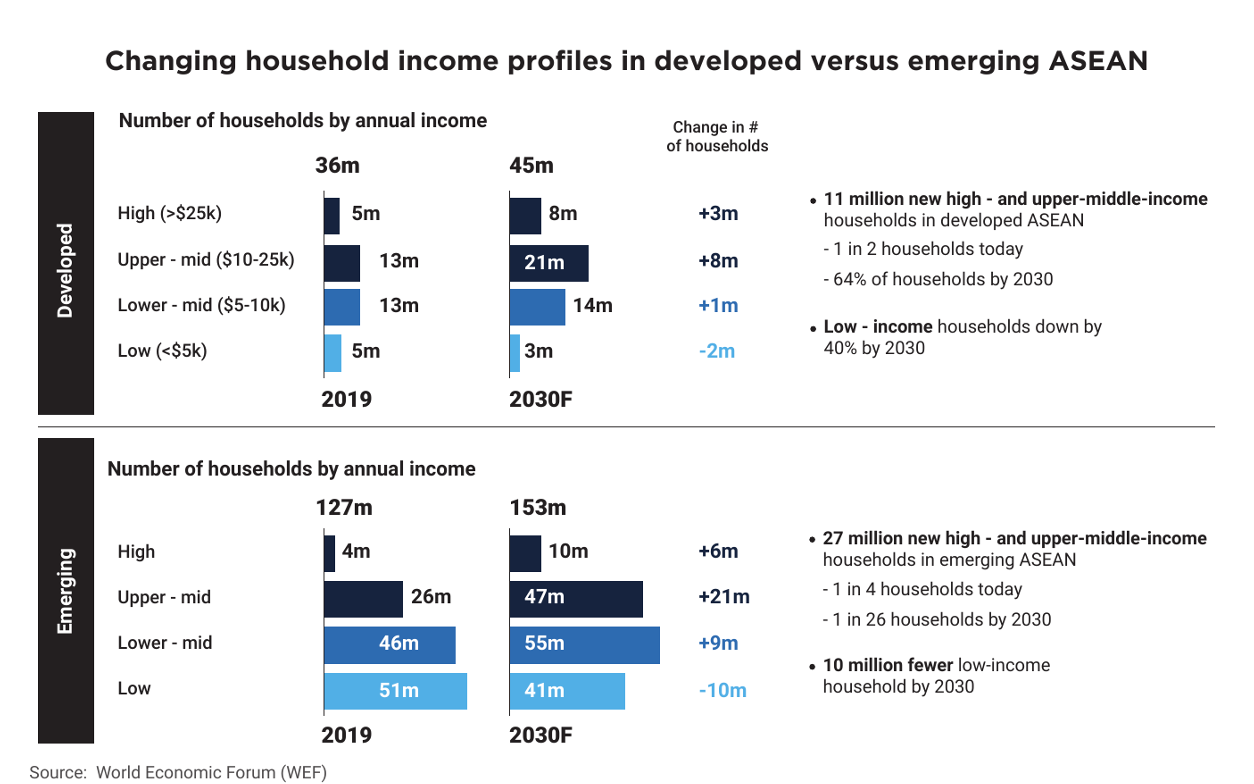
Figure 3: Changing Household Income Profiles in Developed versus Emerging ASEAN. Source: Future ASEAN Sustainable Cities, Eurogroup Consulting (p. 17), based on WEF.
As household expectations evolve, cities will face increasing pressure to provide reliable utilities, accessible transport, quality housing, and efficient public facilities. For companies operating in construction, engineering, infrastructure technology, and urban services, the interaction between rising incomes and growing populations creates multiple potential sources of demand.
Yet urban development cannot be assessed through construction activity alone. Compact development can support more efficient infrastructure provision, but poorly managed density can worsen congestion, environmental pressures, and unequal access to services.
Read more about these considerations in Designing Sustainable Neighborhoods: Density, Energy, and Urban Wellbeing, which examines the relationship between urban design, infrastructure efficiency, and sustainable living environments.
From Urban Expansion to Business Opportunity
The Future ASEAN Sustainable Cities whitepaper highlights several interconnected pressures, including infrastructure deficits, growing energy demand, environmental degradation, and social inequality. Urban infrastructure requires substantial upfront capital, often involves multiple public and private stakeholders, and must remain effective over long operating periods.
As Julien Mialaret, Operating Partner at Eurazeo, observes in the whitepaper:
"Cities currently account for about 70% of global greenhouse gas emissions, while covering only 2% of the Earth's surface and hosting more than 50% of the population."
The statement refers to global urban emissions, but it illustrates the importance of managing the environmental consequences of expanding cities.
Several business considerations emerge from the report's findings:
- Market selection: Assess secondary cities individually, including industrial activity, population trends, infrastructure readiness, and investment policies.
- Infrastructure integration: Evaluate how proposed developments connect with transport, utilities, housing, and existing economic activity.
- Local partnerships: Understand the roles of municipal authorities, infrastructure operators, developers, and other stakeholders.
- Long-term viability: Consider operating costs, environmental requirements, financing arrangements, and changing urban demand.
The report's central implication is that urban growth and sustainable development cannot be approached separately. For businesses, the opportunity lies in understanding how these priorities intersect and developing solutions that address measurable urban needs.
Frequently Asked Questions
How many people will live in ASEAN cities by 2050?
According to UN DESA projections cited in Eurogroup Consulting's Future ASEAN Sustainable Cities whitepaper, Southeast Asia's urban population is expected to reach approximately 527 million people by 2050, representing 66% of the region's population, compared with 334 million urban residents in 2020.
What are secondary cities in Southeast Asia?
The whitepaper generally defines secondary cities as urban centers with populations between 200,000 and 2 million people.
Why is ASEAN urbanization important for international businesses?
Urbanization influences where consumers live, businesses operate, and infrastructure investment is needed. However, market attractiveness differs significantly across locations, making city-level research, regulatory assessment, and local partnerships important considerations.
What challenges could limit sustainable urban development in ASEAN?
Rapid population growth can intensify infrastructure shortages, housing affordability pressures, congestion, energy consumption, and environmental degradation. Addressing these challenges requires coordinated urban planning, appropriate financing, effective governance, and long-term infrastructure development.
Explore the Future of ASEAN Sustainable Cities
Download the Full Future ASEAN Sustainable Cities Whitepaper
Access the complete research by Eurogroup Consulting, developed in cooperation with the French Foreign Trade Advisors (CCE), featuring eight sustainability trends, regional investment analysis, expert perspectives, and strategic recommendations for businesses operating in ASEAN.