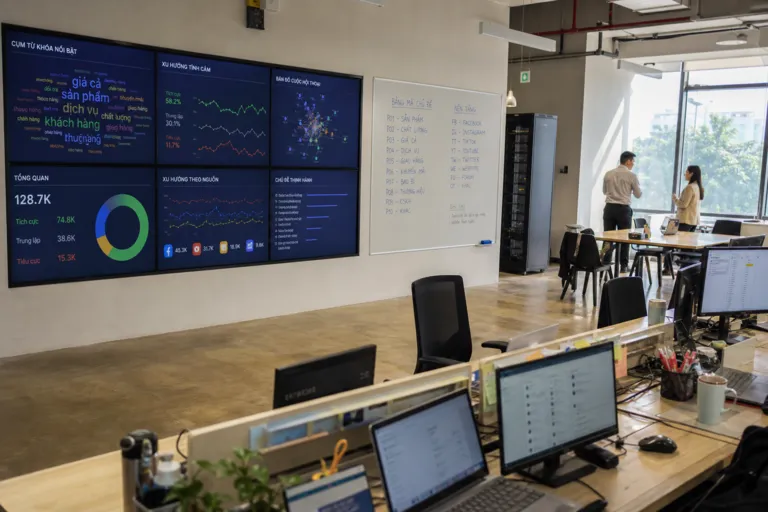
Social listening is the systematic collection and analysis of publicly available online conversations to extract strategic insights about brands, markets, consumers, and competitors. A practical workflow often follows four stages: monitoring, analysis, insights, and action. It starts by tracking keywords and mentions, then applying sentiment analysis and trend detection to convert raw conversation data into something decision-ready. In Vietnam, this matters because social platforms influence the purchase journey from discovery and evaluation through to conversion, so brands need a method that captures real behavior, not just post-level engagement.
The case for research-grade work is also economic. One Vietnam-focused report states that in 2025, annual ad spending on social media reached USD 398 million, a 12% increase from the prior year, and that social media represented 27.8% of total digital ad spend (DataReportal, via AJ Marketing). When budgets rise, the cost of misreading audiences rises too. Social listening helps teams see what people say in their own words, across fragmented spaces, before those conversations harden into brand perception or spread into a wider issue.
Where Vietnam’s Signal Lives: Platform Roles and Reach
Platform coverage should match how Vietnamese audiences actually use social media. DataReportal figures cited in a Vietnam social media marketing overview list Facebook usage at 89.6% of Vietnam’s internet users, followed by Zalo at 86.6%, TikTok at 80.9%, Instagram at 53.7%, and X at 31.5%. Another Vietnam summary report adds that in early 2025, TikTok’s advertising reach covered 40.9% of Vietnam’s total population, with a near-even gender split of 48.7% female and 51.3% male. Those signals support a listening setup that treats Facebook as a broad conversation layer, and TikTok as a culture-led discovery channel where comments can reveal what people think versus what they tell surveys.
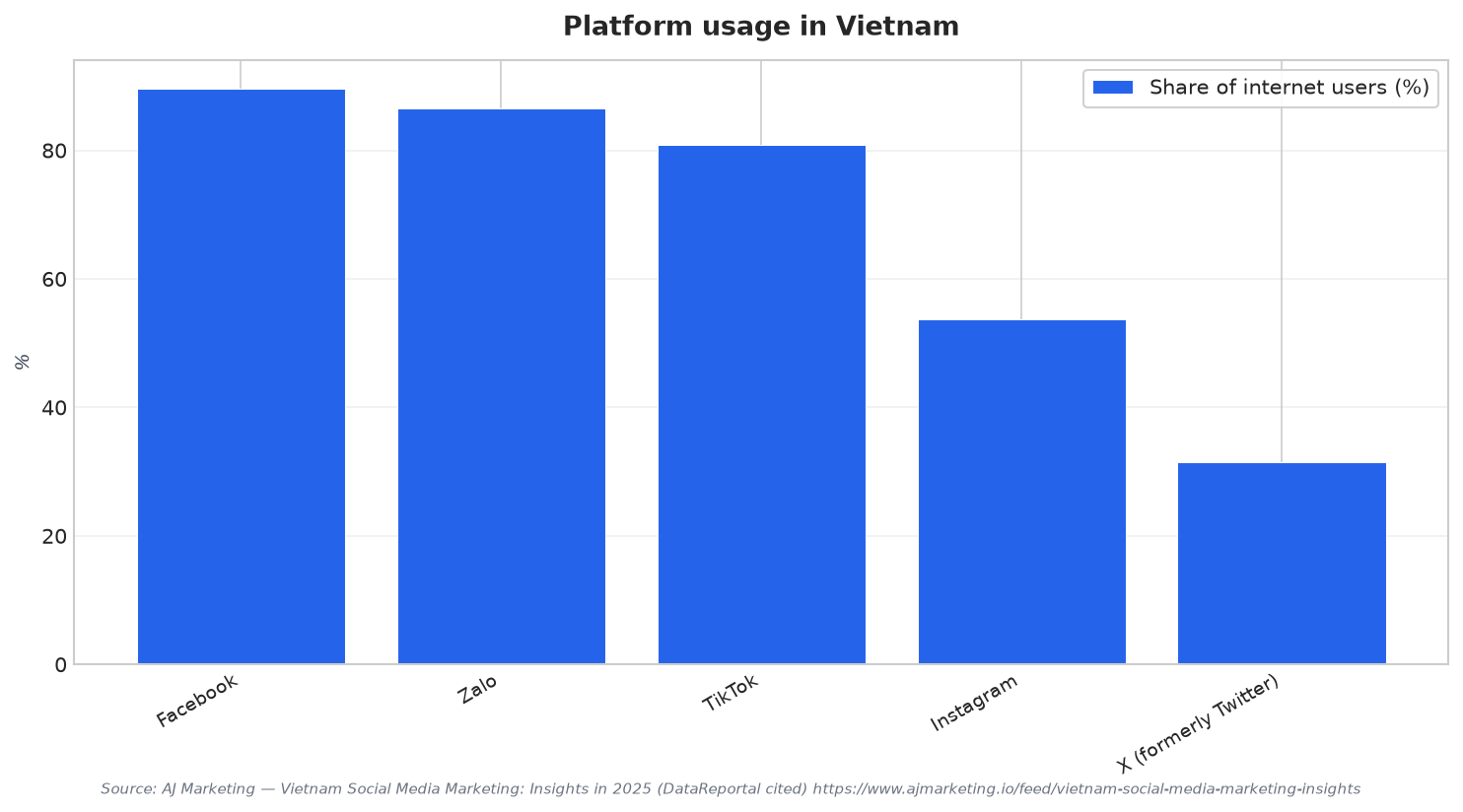
Vietnam also has clear functional specialization across platforms: TikTok for culture-led discovery and creator influence, YouTube for scale and credibility, Instagram for curated lifestyle niches, and Zalo for habitual communication, conversion, and retention. A 2025 Statista note similarly frames Facebook as a popular app for getting news and Zalo as a tool to connect with friends and family, while describing TikTok as a leading app for watching short videos in Vietnam, especially among Gen Z. Taken together, the research implication is straightforward: listening needs platform-specific questions. A discovery platform will surface early interest and language shifts, while a trust-oriented channel is more likely to show evaluation questions and objections.
To make social listening Vietnam teams can rely on, separate “what is being said” from “what it means.” Tool-driven analytics can count mentions, flag sentiment, and surface trending keywords, but research-grade output requires interpretation and synthesis so stakeholders can act. A Thailand-based agency perspective warns that analytics without research expertise can produce dashboards that nobody uses, and it distinguishes social listening (strategic insight) from social monitoring (rapid situational awareness). Apply that lesson locally by writing tighter briefs: define whether you need topic-based listening to map brand perception or identify consumer needs, or account-based listening to benchmark a competitor’s communication strategy and public response over time. Then connect findings back to decisions in marketing, product, and customer experience.
What is social listening, in plain terms?
Which platforms should a Vietnam listening plan prioritize?
What does TikTok’s reach data suggest for research design in Vietnam?
How do you turn social listening in Vietnam into research-grade insight instead of a dashboard?
Why invest in listening when social media budgets are rising in Vietnam?