Packaging choices in Indonesia cannot be validated with one-city insight. Indonesia spans 285 million people across 17,000 islands and includes over 700 languages, which is why purchase behavior varies sharply by island, generation, and income tier. Even the economic map can mislead: Jakarta and Java account for 57% of GDP but only 40% of the population, so research limited to Jakarta generates Jakarta data, not national truth. For packaging testing Indonesia programs, this matters because a pack that wins attention and trust in Jakarta’s modern trade may not translate to smaller cities or different islands where shopping routines and store formats shift.
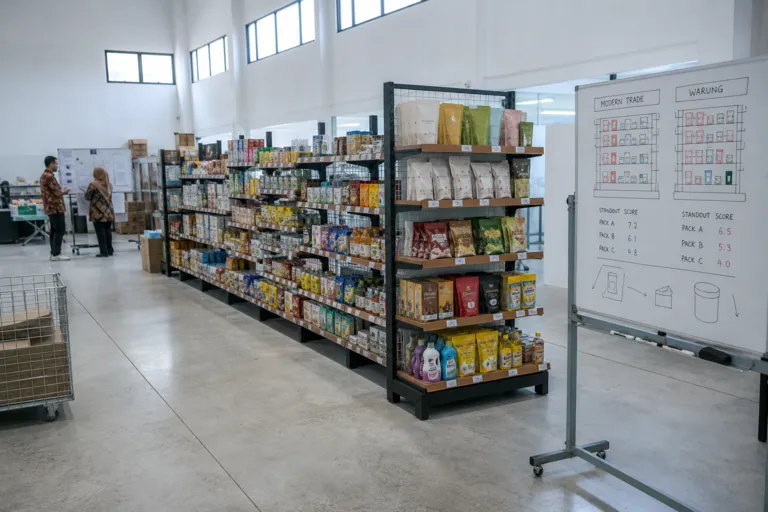
Channel split is the second reason shelf standout needs deliberate testing. Indonesia’s modern trade penetration is lower than smartphone penetration suggests, and traditional trade—warungs, wet markets, and small independents—still accounts for the majority of FMCG volume outside major urban centers. That creates a practical research mandate: test packs in modern trade environments such as Indomaret or Alfamart, but also validate visibility and comprehension in warungs where shelf conditions, assortment density, and shopper missions are different. A product that performs in a minimarket may still miss the consumer who buys from a warung in Surabaya, so the same design should be stress-tested in both contexts.
What to Test: Compliance Space, Format, and Material Signals
In modern retail, front-of-pack space is not only about branding. BPOM’s 2024 Nutri-Level labeling rule enlarged front-of-pack footprint requirements, and that can force tradeoffs between mandatory information and shelf impact. In parallel, format preferences shape how a product reads on shelf. In flexible packaging, bags and pouches captured 46.88% of market size in 2025, and stand-up designs, zippers, and spouts are positioned for convenience and appeal in modern retail channels. That makes it essential to test whether the same pack architecture remains legible and distinctive when execution shifts to warungs with tighter displays and less standardized shelving.
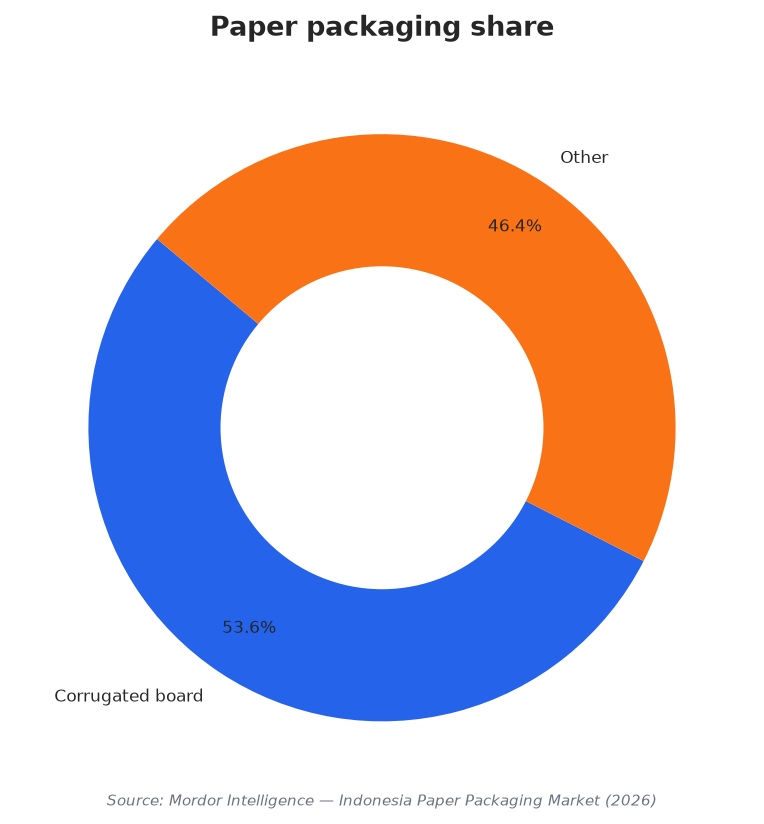
Material strategy adds another layer to research design because Indonesia’s packaging mix is evolving. In paper packaging, the market size in 2026 is estimated at USD 16.02 billion, up from USD 15.15 billion in 2025, with 2031 projections of USD 21.15 billion at a 5.72% CAGR. Corrugated board held 53.61% share in 2025, and corrugated boxes captured 41.78% of market size in 2025, signaling how important protection is when goods move across 17,000 humid islands. A 2024 survey cited in the same source found 77% of Indonesian food-and-beverage firms willing to absorb higher costs for greener packaging, while 42% of consumers would pay a premium—useful hypotheses to validate through local pack tests by category and channel.
Plastic packaging trends also shape what to test for standout and value cues. One source expects Indonesia’s plastic packaging market to reach USD 10.47 billion in 2025 and grow at a 6.65% CAGR to USD 14.45 billion by 2030. Another estimates the market at $8.7 billion in 2026, projected to reach $15.73 billion by 2035 at a 6.80% CAGR, highlighting that published figures vary by methodology. Flexible solutions commanded 54.23% revenue in 2024 in one report, and films with improved oxygen and moisture barriers can permit thinner constructions, reducing resin usage by up to 18% without compromising shelf life. Packaging research should therefore test not just graphics, but also how barrier claims, pack feel, and format communicate value in modern trade versus warungs.
How should packaging testing in Indonesia be structured across modern trade and warungs?
Why can’t Jakarta-only research predict national packaging performance?
What front-of-pack constraint should packaging research include in Indonesia?
Which packaging formats are most associated with modern retail appeal in Indonesia’s flexible packaging market?
What paper packaging figures can help frame research priorities in Indonesia?