Vietnamese brands are facing growth signals across multiple sectors, and that pressure makes decision speed a competitive advantage. In beverages, one Vietnam market study cited a value of over USD 2.5 billion in 2019 and projected a CAGR of around 14.2% for 2022-2028. Another beverages release described the Vietnam beverages market as USD 480 Bn in 2021 with an expected CAGR of around 12.5% over 2022-2028. In parallel, Ken Research’s “Vietnam Oil and Gas Market” update described a current market size valued at USD 12 billion based on a five-year historical analysis. In environments like this, waiting for long, linear research cycles can feel misaligned with how quickly commercial decisions must land.
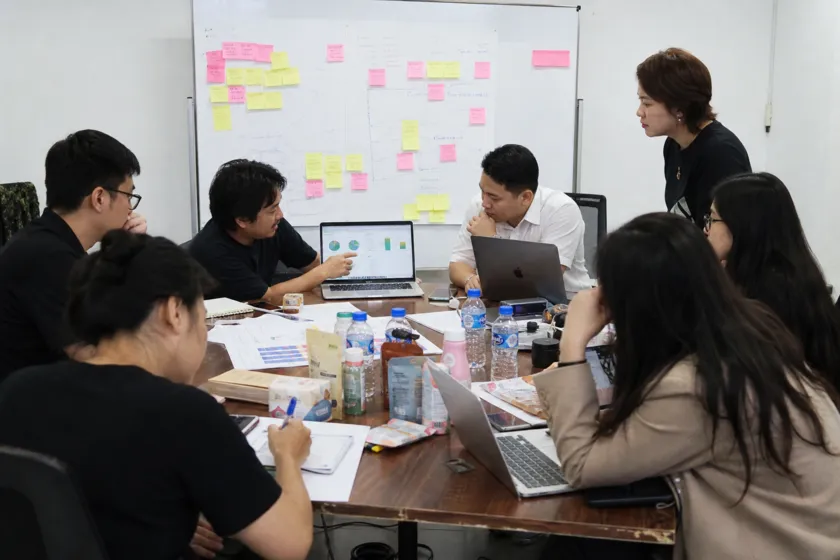
Agile research sprints map well to how modern marketing teams are being pushed to work: create, test, learn, refine, and repeat. One Ad Age analysis framed agile marketing as rapid, adaptive cycles that iterate and seek evidence of lift at each step, and it argued that speed, evidence, and creativity are not trade-offs. The same piece provided a concrete example of rapid RCT pre-testing in the US: Bimbo Bakeries USA used it across 11 brands and, in one test for Thomas’ English Muffins, learned the traditional voice generated 2x the lift on brand equities and purchase intent versus an edgier voice. That is not Vietnam-specific performance data, but it is a clear illustration of why sprint-based learning loops are attractive when leadership wants proof before scaling creative.
AI, Synthetic Data, and the Case for Faster Learning—With Guardrails
Another reason agile market research is gaining attention is the way AI compresses the time between question and insight. Marketing Week reported that organizations are integrating AI in research to remove “drudge work,” speed up mass data analysis, and reduce the time taken to provide insights to marketing teams. It also noted that AI-generated “synthetic” data can be used to test hypotheses by surveying AI-generated profiles that closely mimic an audience, helping teams fast-fail before investing in real research. But the same source warned that valuable insights often come from face-to-face conversations with real people, and it gave an example from Shell where a physical gesture used by truck drivers would not reliably show up in transcripts. For Vietnamese brands adopting sprint methods, the implication is simple: use AI to accelerate cycles, but keep human nuance in the loop.
Vietnam’s own brand outcomes also reinforce why teams want shorter feedback loops. In September 2025, an EQS Newswire release said VinFast won six awards at the Asia-Pacific Effie Awards and became the first Vietnamese brand to win a Gold at the competition. The same release reported that, within 66 hours of opening early reservations in Vietnam, VinFast secured 27,649 pre-orders for the VF 3, which it described as an industry record, and it highlighted a retail first in Vietnam: automobiles sold via e-commerce platforms, with transactions closed through live-streaming sessions hosted by key opinion leaders. When markets can move that quickly, Vietnamese marketing and insights teams have strong incentives to adopt sprint-based research that can keep pace with launches, channels, and messaging choices.
Putting it together, the appeal of agile market research Vietnam teams are exploring is not a buzzword problem; it is a workflow solution. The sprint model matches the push toward iterative creative development, rapid testing, and learning cultures that celebrate evidence rather than only post-launch metrics. It also aligns with “fail fast” thinking described in an Adweek interview, where AI-enabled speed makes experimentation feel less risky because teams can try ideas quickly and move on if they fail. For Vietnamese brands, the practical path is to set clear sprint questions, use AI where it genuinely reduces analysis time, pressure-test hypotheses early, and then validate the most important decisions with real consumers—especially when nuance matters.
Why are Vietnamese brands showing interest in agile market research sprints?
What does “create, test, learn, refine, repeat” mean in practice?
How can AI speed up market research without replacing human insight?
What is an example of rapid testing influencing creative choices?
How does VinFast’s VF 3 launch show the need for faster insight cycles?