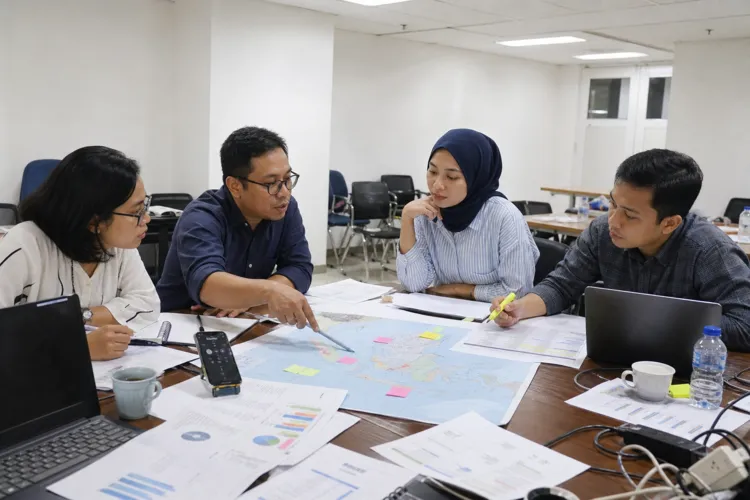
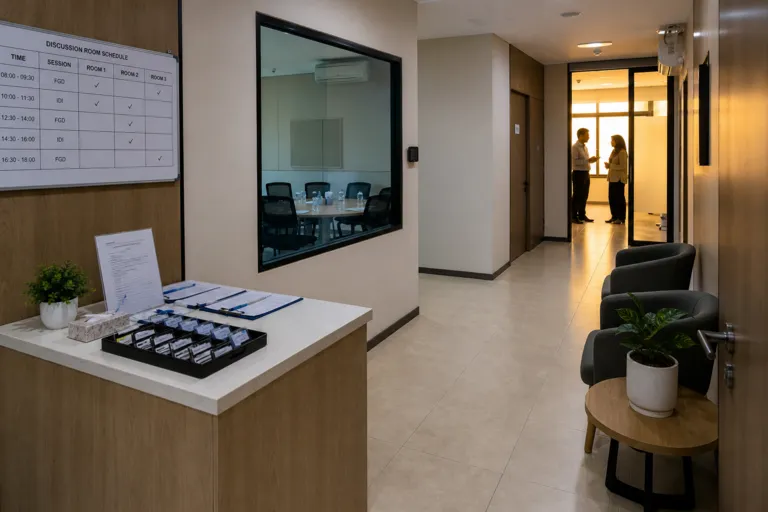
Planning qualitative research Indonesia teams can trust starts with understanding the market context and the communication context. Indonesia is the world’s fourth most populous country, with over 275 million people, and it is digitally active with 200+ million internet users. It is also culturally diverse, with 700+ languages and dialects, where Bahasa Indonesia is national, but regional languages such as Javanese, Sundanese, and Balinese carry strong local meaning. These realities affect recruitment, moderation, and how people express disagreement. Researchers also need to anticipate politeness and indirect communication styles that can obscure true opinions unless the discussion is moderated with care and cultural fluency.
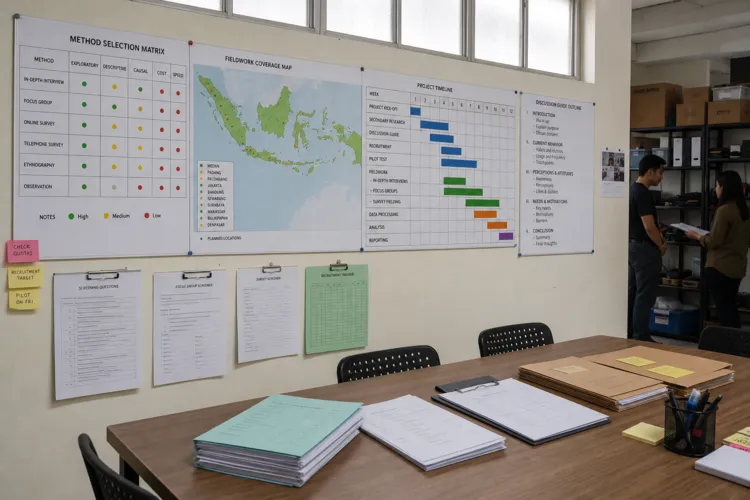
Method choice should follow the business question. Use qualitative approaches when you need to understand why people behave as they do, what drives choice, and what prevents action. In-depth interviews (IDIs), focus group discussions (FGDs), and ethnographic observation are positioned as ways to generate rich insight that a quantitative survey cannot replicate. In Indonesia specifically, interviews with consumers, industry experts, and business leaders are described as crucial for understanding nuanced cultural factors that influence consumer behavior. That cultural layer matters because purchasing decisions and brand perceptions are shaped by diverse ethnicities, religions, and traditions, and market research can help tailor offerings to local sentiments.
FGDs vs IDIs in Indonesia: How to Set Sample, Time, and Budget
Sample planning should be based on thematic saturation, not a fixed number. For IDIs, saturation typically occurs at 10–15 respondents per segment, while for FGDs, 3–4 sessions per segment is usually sufficient. IDIs often run 45–90 minutes and are positioned as ideal for sensitive topics, B2B decision-maker work, and situations where social desirability bias could distort group discussion. Budget expectations can be framed early to align stakeholders. One example cost range given for 10 IDIs in Jakarta (including recruitment, interviews, transcription, and thematic analysis) is Rp 40–80 million. For FGDs, one session (recruitment, moderation, facility, and transcript) is Rp 15–25 million per session, while a face-to-face quantitative survey with 500 respondents in one city is Rp 75–150 million.
Execution quality in Indonesia often hinges on language handling and the ability to read what is not said. Multilingual participants may switch between Bahasa Indonesia and regional languages, and English may be used in business but is not widely used in rural areas. Practical solutions cited include bilingual moderators who are fluent in Bahasa Indonesia, English, and local dialects, plus simultaneous translators so international clients can follow in real time. Online formats can also support speed and access: online focus groups can be run with four to six people, and online IDIs can be conducted worldwide using tools such as MS Teams and Zoom, with live viewing and simultaneous translation services available for multi-country work.
Designing culturally appropriate discussions is not only about wording questions. Consumer life in Indonesia is described as a balance of tradition and modernity, with bargaining culture still strong in traditional markets, and major holidays like Ramadan and Eid driving retail booms. There is also an urban vs rural divide, where Jakarta, Surabaya, and Bandung represent premium consumption while smaller towns emphasize affordability and practicality. Digital behavior matters too: one cited example shows WhatsApp group discussions combined with government-issued infographics increasing community understanding from 32% to 78% among 50 participants, with higher engagement observed among younger adults. For researchers, the practical takeaway is to match stimulus, language, and facilitation style to the audience’s lived context, then use two-way feedback mechanisms where possible.
How do you decide sample size for qualitative work in Indonesia?
When should you use IDIs instead of FGDs in Indonesia?
What do FGDs and IDIs typically cost in Jakarta?
What cultural nuance most often affects results in Indonesian discussions?
How can online qualitative research support multi-city or multi-country teams?