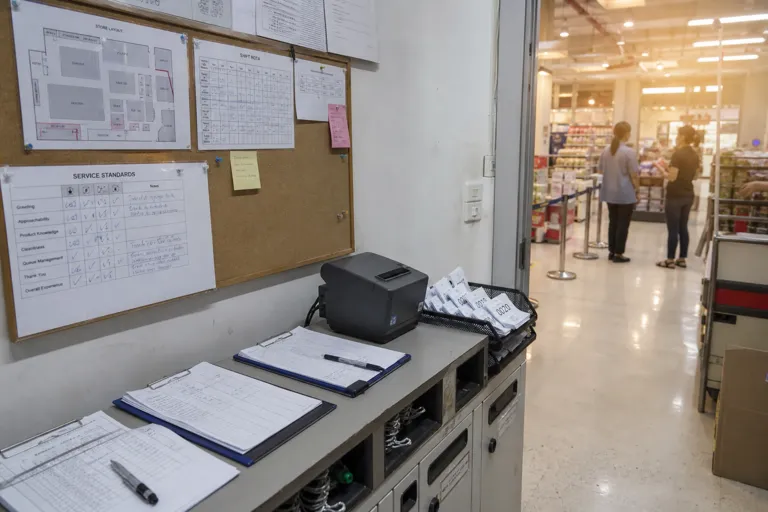
In Thailand, retail and service performance is created at the counter, on the shop floor, and inside real interactions. Mystery shopping is built to capture that reality. It uses trained, anonymous evaluators who act like ordinary customers, then document what they see and experience across the full customer journey. Programs typically collect evidence on service quality, compliance with standards, and how consistently teams execute what the brand has trained. Because it is a form of primary market research, it often uses quantitative techniques, such as a structured form that rates the experience, while still leaving room for practical observations that explain what happened and why.
Modern programs are also designed for an omni-channel world. Mystery shopping has evolved with tools such as mobile apps, GPS tracking, and real-time reporting, which are used to improve efficiency and accuracy. That matters when a brand needs comparable, repeatable observations across outlets and teams. In Thailand’s retail landscape, the measurement challenge is amplified by scale and change. One market outlook values the Thailand retail market at USD 154.17 billion in 2026 and projects growth at a 3.66% CAGR to USD 184.5 billion by 2031. Another analysis forecasts the Thailand retail market to increase by USD 54.41 billion at a 7% CAGR from 2025 to 2030, showing why execution discipline becomes a competitive advantage.
What Mystery Shopping Measures in Thai Retail and Service Settings
Strong mystery shopping programs focus on behaviors that influence trust and outcomes. Retail mystery shopping is described as hiring undercover evaluators to assess customer service, product quality, and the overall experience, including visits that involve purchases, questions, and observation of employee behavior. It also checks whether employees follow policies and procedures, supporting compliance with brand standards. Common evaluation areas used by companies in retail, hospitality, and automotive include service quality, store appearance, promotional effectiveness, and sales interactions. This makes the output more than a scorecard; it becomes an audit of what the customer actually encounters in everyday conditions.
Thai agencies also emphasize depth and decision usability. One Thailand-based provider deploys trained field researchers rather than crowdsourced app users and evaluates sales interactions, service standards, compliance, and competitor tactics across Thailand. Its CX and sales audits test needs analysis depth, product knowledge accuracy, and objection handling, while monitoring greeting speed, politeness, staff grooming, and adherence to the brand’s own SOPs. For automotive, it can assess the test drive experience, dealership standards, and follow-up intensity by tracking response times and communication quality after a visit. For multi-location brands, visual merchandising checks can cover planogram compliance, stock display execution, and promotional signage accuracy.
The value of these audits is clearer when results link directly to training and operational fixes. Mystery shopping is often positioned as unbiased because staff do not know the evaluator, and it helps identify training needs with real-world feedback. Reports can blend structured KPI scoring with qualitative narratives, capturing the emotional tone of interactions. In some cases, providers use recordings, verbatims, and observed body language to explain the “why” behind scores. A cited behavioral outcome links positive experiences to growth: 67% of customers can repeat business and refer services to other people. For brands building a program, cost ranges are also cited globally, from £50–150 for simple retail visits to £200–500+ for sophisticated hospitality assessments, with shoppers typically paid for their time plus purchase reimbursement.
How does Mystery Shopping in Thailand help measure real customer experience?
What can mystery shopping evaluate in retail and service locations?
Which industries in Thailand commonly use mystery shopping audits?
What Thailand retail market figures are relevant context for experience measurement?
How much can mystery shopping cost, and what outcome is cited for positive experiences?