
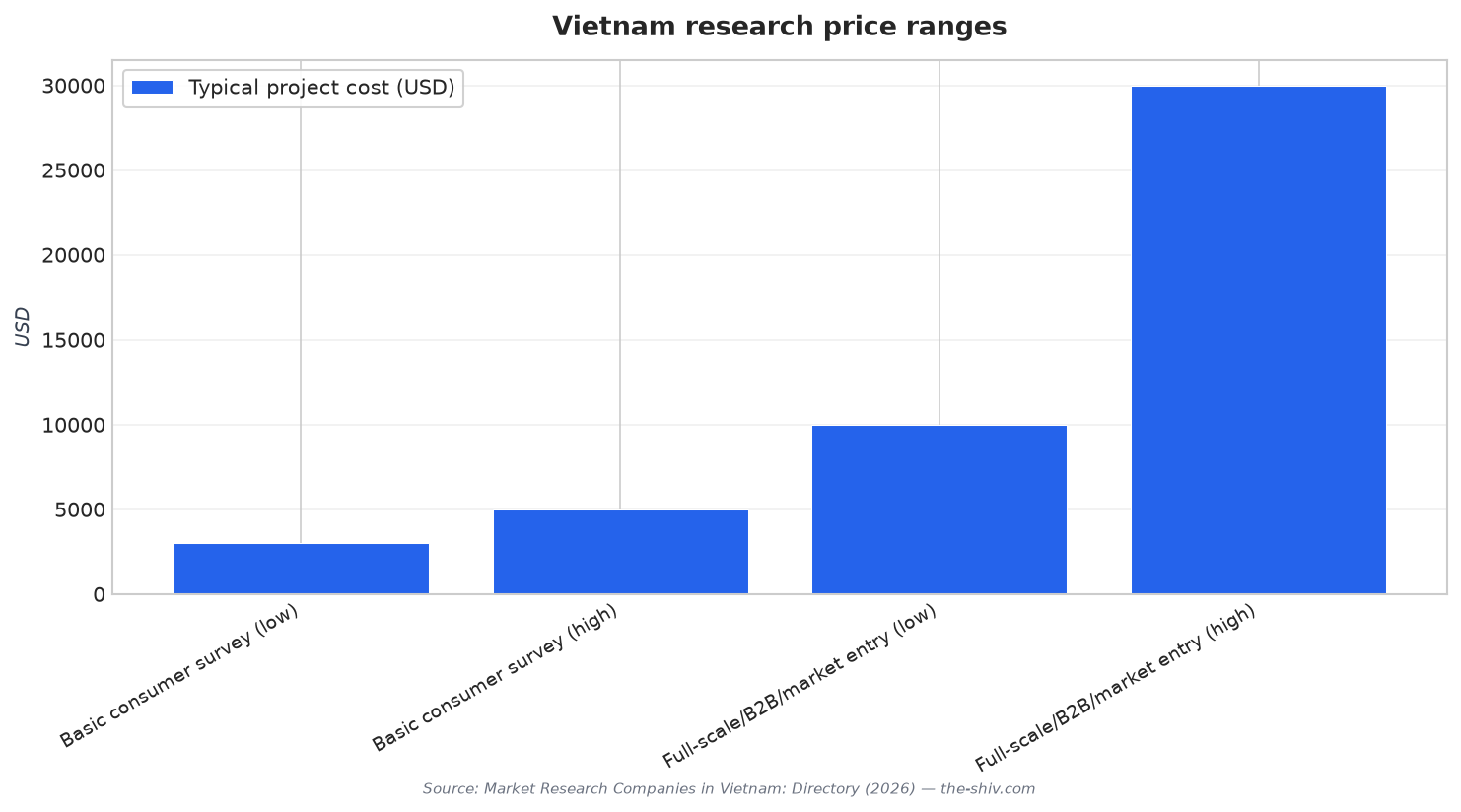
Planning a Vietnam expansion often starts with one practical question: what should you budget for research? In Vietnam, pricing varies most by scope, methodology, and sample size. A directory of Vietnam-focused research providers notes that a basic consumer survey may start from US$3,000–US$5,000. The same source says full-scale market entry studies or B2B research can range from US$10,000 to US$30,000 or more. Those ranges are useful as anchors, but they are not “one-size-fits-all.” Your total depends on what decisions you need to make, what data already exists, and whether the research must cover multiple regions or segments.
The first cost driver is research design. A 2026 Vietnam market research guide argues that 80% of research success is determined before the project starts, by deciding the purpose, scope, and a hypothesis. That planning step also protects your budget. For example, the guide warns that trying to target “all of Vietnam” can make costs enormous and can blur regional differences. Vietnam is long from north to south, and culture and temperament can differ greatly by region, so narrowing geography and respondent attributes matters. The same guide gives an example of setting a clear target such as households with a monthly income of $1,000 or more, which helps reduce waste in screening and fieldwork.
What You Pay for: Method, Depth, and Extras
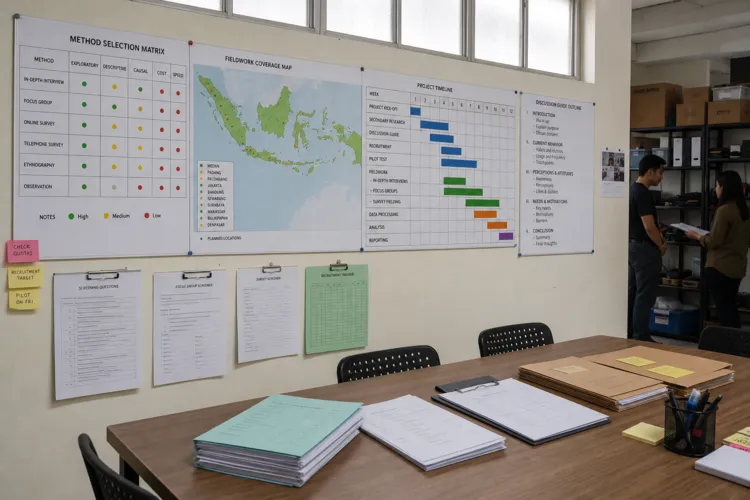
Method choice shifts the budget as much as scope. The Vietnam directory highlights two broad approaches: qualitative research explores opinions and behaviours through tools like interviews and focus groups, while quantitative research relies on structured data collection and analysis. Another cost lever is “how much data” you need. A 2026 update from Drive Research states there is a direct correlation between the size of the population you must target and project price. It also emphasizes sample size: the more responses you need, the more you’ll likely pay, especially for phone, mail, or in-person work. Optional items can add cost too, such as live focus group streaming, printed materials, data dashboards, or multilingual surveys.
In many Vietnam projects, cost also reflects how much can be done from existing information versus primary fieldwork. MAI International describes building studies by mixing desktop research, regulatory checks, trade data analysis, and company interviews. It also outlines a package including “Desktop Research + Trade Data Analysis + Domestic Production and Sales Volume Research” to organize market size, growth potential, and the outline of supply and demand. This kind of approach can reduce the need for large-scale surveying when you mainly need structure, players, and decision support. However, if you must validate on-the-ground realities, MAI’s examples include retail store checks in Ho Chi Minh City covering price ranges, shelf layout, competing brands, and promotions.
To keep market research cost Vietnam budgets under control, focus on value, not only the quote. Drive Research cautions that some companies may charge premium prices but deliver little beyond exported data in an Excel template or automated tables in a PDF with limited analysis. Ask what you will receive: cross-tabs, a topline summary, or a comprehensive report with highlights, themes, and recommendations. Finally, choose a partner carefully. The Vietnam research directory stresses that selecting a firm is not just about price; a rushed choice or the wrong partner can lead to misleading data and costly missteps. A clear brief, realistic timeline, and prioritized “must-have” outputs are the simplest ways to align spend with decisions.
How much does market research typically cost in Vietnam?
What factors most influence Vietnam market research pricing?
Do qualitative and quantitative methods affect the budget differently?
How can I avoid paying for a report that lacks real analysis?
Can desk research and trade data analysis reduce costs in Vietnam studies?