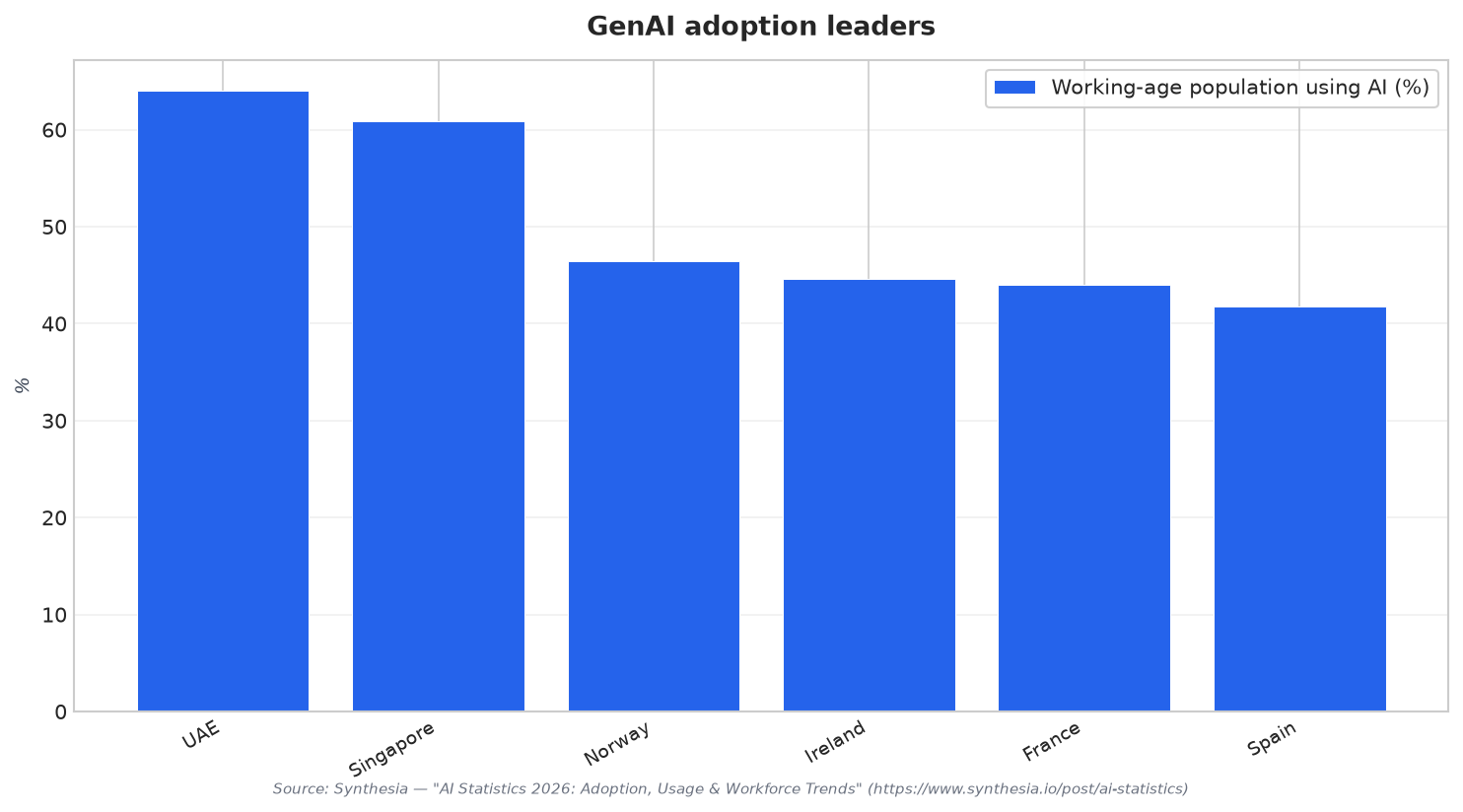
Market research in Singapore has long been associated with deep expertise and high price tags. Alylytiq says studies have routinely cost “tens of thousands of dollars,” which historically pushed smaller businesses to rely on instinct. That is changing as AI automates the most labour-intensive parts of the workflow while keeping senior researchers involved for interpretation and quality control. In practice, this shift is making professional-grade research easier to access and faster to execute. It also fits a broader environment where AI use is already common locally, with Singapore reported at 60.9% generative AI adoption among its working-age population in a global comparison.
Alylytiq’s Automytiq shows how AI can be packaged into a standardised engagement that prioritises speed and clarity. The firm says a commissioned study that would typically cost SGD 30,000 can be delivered through Automytiq for around SGD 6,000, describing this as an 80% reduction. It ties those savings to automation across the most time-consuming stages, but with senior researchers “in the loop” to maintain quality. The productised format also matters: Automytiq is positioned as separate from Alylytiq’s bespoke corporate consulting, which is fully custom-designed, senior-led, and often spans multiple markets and methodologies.
Where AI Speeds Up the Research Cycle in Singapore
Automytiq is described as covering the full research cycle through four connected solutions that are designed to compress timelines. Market Intelligence uses AI-assisted secondary research to map market size, competitor landscape, and customer trends, drawing on licensed and publicly available data sources. Guided Brief-to-Proposal turns a structured questionnaire into a full research proposal, so SMEs can start with sharper scope without in-house research expertise. Automated Research Design converts approved proposals into fieldwork-ready instruments such as discussion guides, screeners, and questionnaires, and Alylytiq says this can cut design time from weeks to days. Finally, Bespoke Story Reporting translates raw results into customised narrative reports focused on what the numbers mean and what to do next.
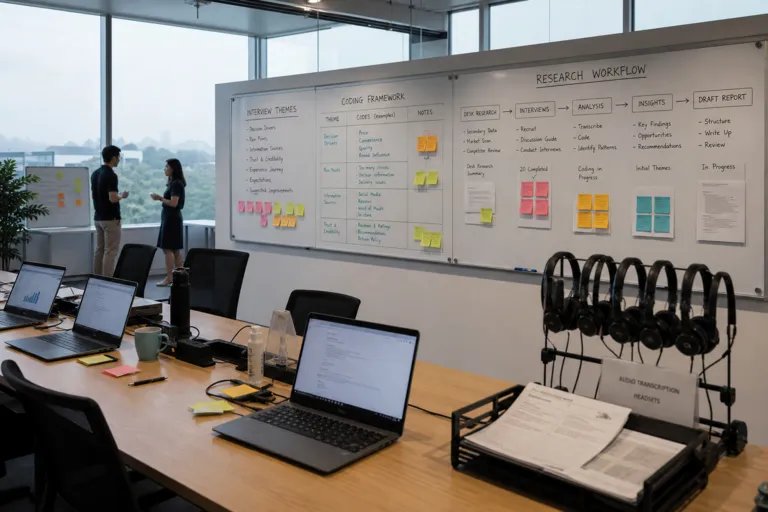
These approaches are already being applied in client work. Alylytiq says it used Automytiq for SME payments fintech Handshake Finance to map the target market and competitive landscape, which helped sharpen go-to-market focus. It also supported a larger client engagement for Anton Solutions Group by delivering insights into financial risk management opportunities across new markets. Separately, a Singapore market research buyer’s guide notes that many Singapore-based teams now run “hybrid research stacks,” where AI tools complement agencies between major projects. It cites UserCall being used by Singapore-based product, CX, and insights teams to run AI-moderated voice interviews and automatically synthesize themes, sentiment, and key narratives.
Zooming out, AI is also framed as a general accelerator for analysis and reporting. Meltwater describes generative AI in market research as speeding up data analysis, uncovering hidden patterns, automating reports, and enabling predictive insights. It also notes that AI pipelines can process messy, multi-source data in seconds rather than weeks, and highlights a Seattle-based example, Bridgetown Research, using bots to crawl sources such as news outlets, financial filings, industry blogs, and social media for real-time updates. For AI market research in Singapore, the pattern is clear: firms and teams are using AI to move faster on scoping, synthesis, and reporting, while still leaning on human expertise for research design choices, interpretation, and decision support.
How are Singapore firms using AI to speed up market research?
How much can AI-led market research cost compared with a typical commissioned study in Singapore?
Which parts of the research cycle does Alylytiq’s Automytiq cover?
What does “hybrid research stack” mean for Singapore-based teams?
What generative AI adoption figure is reported for Singapore in the sources?