Online research can move fast, but speed does not guarantee credibility. A panel is a pre-recruited group that agrees to take part in online studies, and members provide demographic and behavioral details when they join so researchers can select the right respondents later. That structure supports targeted fieldwork, yet it also raises a core risk: low-quality or fraudulent responses can distort findings and slow decision-making instead of improving it. This is why online panel data quality matters from recruitment through survey close, especially when incentives and generic links increase exposure to fraud in web-based surveys.
Fraud and poor data are not abstract issues. A multicase analysis in the Journal of Medical Internet Research notes that web-based surveys can be more susceptible to fraud, particularly when a generic invitation link or a financial incentive is offered, and it concludes that commonly used anonymized methods offering incentives are at substantial risk for fraud. The same analysis emphasizes that robust detection methods were essential across four studies, with strategies such as personal identifiers and IP addresses, and it highlights a real tension between participant privacy and ensuring accuracy. It also recommends planning prevention and monitoring during study design, so teams do not rely only on removing bad responses after fieldwork.
What “Good” Looks Like: Hygiene, Verification, and Engagement
Quality starts with how panels are built and maintained. Clickworker describes professional panel providers as infrastructure partners that manage pre-profiled participants who verify themselves through double opt-in procedures, with continuous profiling on socio-demographic and psychographic characteristics. It also points to multi-source recruitment strategies (open recruitment vs invitation-only) to reduce cluster sampling and self-selection bias. A key operational idea is “panel hygiene”: reputable providers regularly purge inactive users and cross-reference duplicates, reducing the risk of “professional survey takers” focused only on incentives. In practice, deeper profiling also reduces wasted sample in complex quota plans because targeting is more precise.
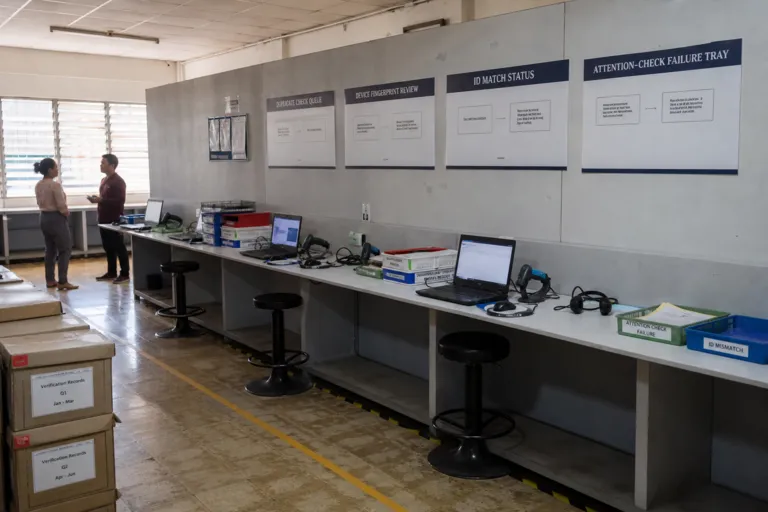
Fraud defense also requires active detection while a respondent is taking a survey. TGM Research explains that AI-powered verification tools can help ensure respondents are genuine and not duplicates, and that AI can track behavioral patterns to catch low-quality responses such as speeding, straight-lining, or nonsense in open-ended answers. It adds that advanced tools can trigger adaptive questions to verify engagement, and if inconsistencies persist, respondents can be disqualified mid-survey so their data does not distort results. ElevenMR describes a complementary workflow: reviewing screeners and questionnaires early to keep incoming respondents genuine and relevant, while using real-time digital fingerprinting for deduping within and across panels via dtect.
In Southeast Asia, the fight for quality is tied to broader data discipline, not surveys alone. A MARKETING-INTERACTIVE roundtable in Jakarta surfaced how inaccurate data can create operational distraction, and how duplication can grow when teams take shortcuts at data entry. One example came from Adira Finance, where sales agents may input repeat customers as new profiles because it is “the easiest method,” creating duplicates that make it hard to know which record is real. The article also describes how siloed teams can waste time arguing over “which data is the best,” and how differing regulatory requirements can complicate integration across platforms. For panel research, the lesson is clear: align definitions, prevent duplicates, and standardize verification so the survey dataset remains consistent and usable.
What is an online market research panel, and why does quality matter?
Why are incentive-based web surveys at higher risk of fraud?
How do panel providers protect online panel data quality in practice?
How can AI help detect survey fraud during fieldwork?
What does Indonesia’s data-duplication problem teach survey teams in Southeast Asia?